Freelance artist petitions need clear proof of future work, even without a permanent employer. USCIS frequently sends a Request for Evidence, a formal request for missing proof, or denies petitions that offer vague plans instead of contracts or deal memos.
Our post on the new USCIS memo explains what has changed for immigration cases inside and outside the United States.
Without deal memos that spell out the work, pay, and dates, officers may find no qualifying U.S. engagements. We discuss how the new memo affects immigration cases in a separate post.
Independent artists booking work across the country can use an O-1 agent petitioner to file for work with multiple clients. That agent cannot simply vouch for your reputation. The filing needs an itinerary supported by written terms from each prospective client. Missing those details can put the petition at risk during federal review.
What’s Inside This Guide
-
Petitioner Structures for Independent Creators
The Anatomy of an Admissible Deal Memo
Full contracts in entertainment and fine arts can take months to negotiate. Federal rules allow an O visa for artists filing to use shorter written summaries, often called deal memos. Under the federal regulation, an oral agreement with an employer or client is acceptable if written terms confirmed by both parties support it.
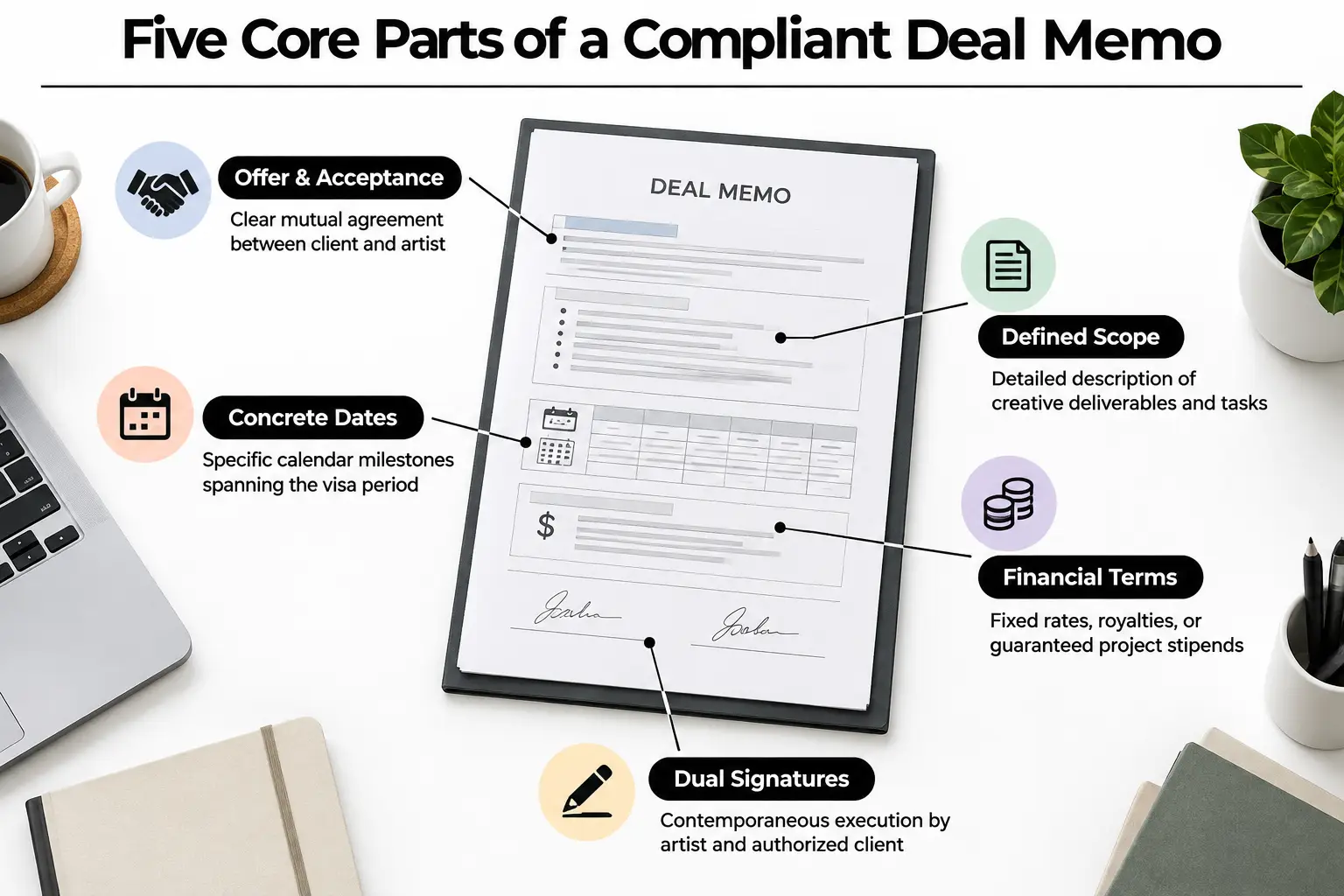
Five core parts of a compliant deal memo
Each deal memo in an O-1 petition must give the reviewing officer these basic terms in plain language:
-
Offer and Acceptance: State clearly that the client has engaged the artist and that the artist has accepted the assignment.
-
Precise Scope: Describe the actual services, such as a gallery exhibit, recording session, or scheduled performance.
-
Defined Timeline: Give start dates and completion milestones, with performance schedules covering the requested visa period.
-
Financial Compensation: Specify how the artist will be paid, including applicable hourly rates, project fees, royalties, or performance payments.
-
Dual Signatures: Include written or verified digital signatures from the artist and hiring representative, signed at the time of the agreement.
How USCIS Evaluates Project Agreements
During review of an agent-based petition, immigration officers check whether the paperwork shows actual work rather than hoped-for bookings. Officers use the agency’s policy guidance to check that events are confirmed and have funding.
Documents that read like early expressions of interest rather than signed agreements prompt officers to question whether the itinerary reflects real commitments.
Reviewers also check whether outside venues and producers operate as legitimate businesses. Contracts with an entity whose operations or online presence cannot be verified will draw questions. Required union consultations must be included too. Groups such as SAG-AFTRA, AGMA, or the American Federation of Musicians (AFM) review the proposed terms against industry standards.
The Detail Most People Miss: Mutuality of Obligation
Conditional hiring language is the most common defect in freelance deal memos. Wording such as “contingent upon securing future financing” leaves the booking uncertain. Dates “to be determined later” create the same problem: officers treat the proposed work as speculative.
Both sides must make a binding commitment, even with standard cancellation clauses or force majeure terms covering events outside their control.
Deal Memos Compared to Standard Artist Contracts
Independent professionals generally use three types of employment evidence in immigration filings. Knowing what each document proves, and how much drafting it needs, helps you meet federal requirements without holding up the application unnecessarily.
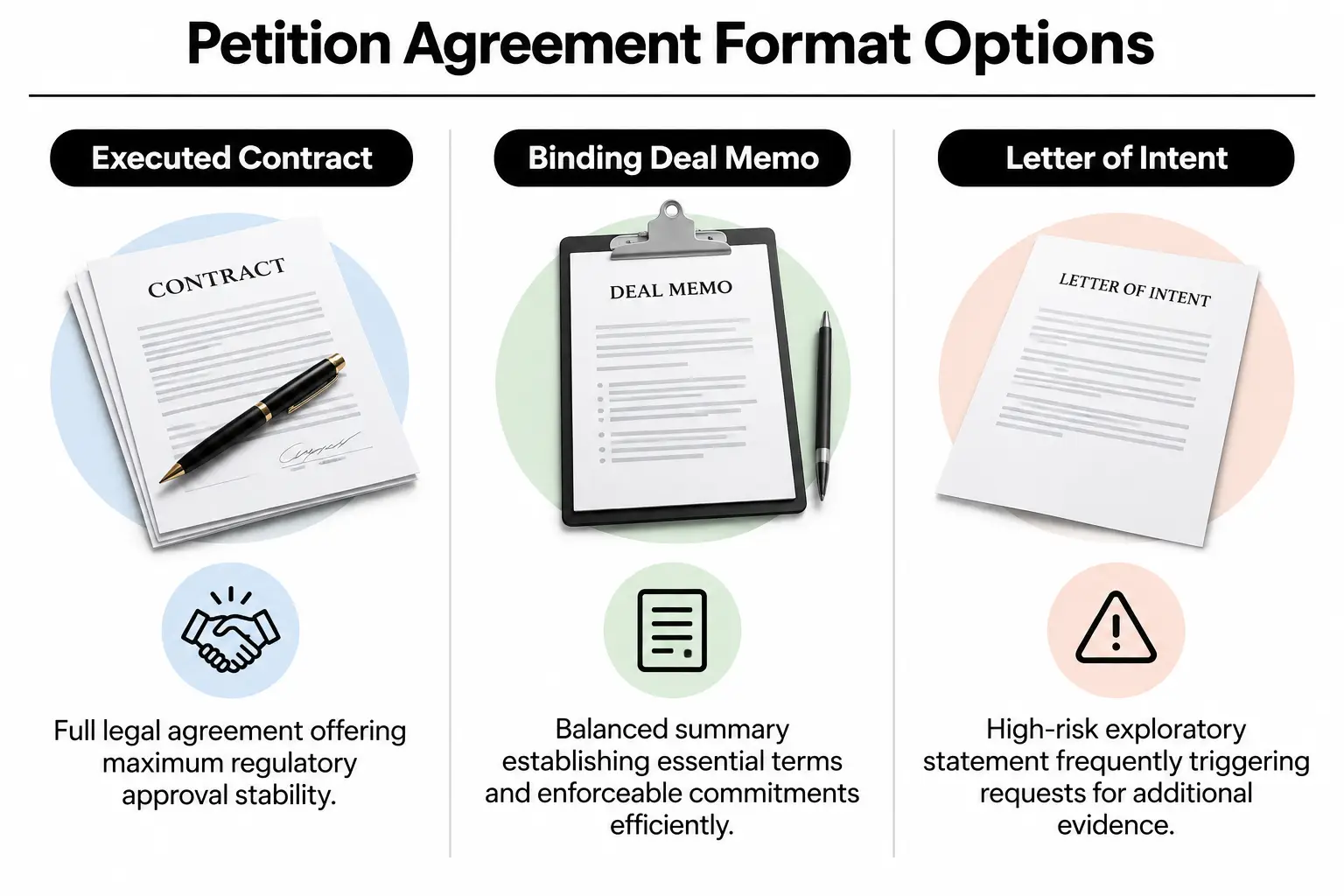
Agreement formats for a petition
|
Documentation Option |
Evidentiary Weight |
Drafting Complexity |
Approval Stability |
Typical Use Case |
|---|---|---|---|---|
|
Signed long-form contract |
Maximum |
High ($$$) |
Very stable |
Major film productions, touring ensembles, institutional roles |
|
Binding deal memo |
High |
Moderate ($$) |
Stable |
Freelance engagements, regional productions, multi-client schedules |
|
Letter of intent (unsigned terms) |
Inadequate |
Low ($) |
High risk of denial |
Early project discussions, speculative work, unscheduled shows |
Long-form contracts offer broad legal protections, but they can be impractical for artists building a multi-year calendar from short gigs. A properly drafted memo gives officers the firm commitments they need. Every three-day booking does not need forty pages of standard contract language.
For more on changing federal expectations, read our discussion of new rules affecting artist immigration.
Petitioner Structures for Independent Creatives
U.S. immigration law does not allow artists to self-petition for temporary nonimmigrant talent visas. Independent creatives therefore need an appropriate sponsor to file for them. Your choice of petitioner affects what the deal memos and supporting documents must show.
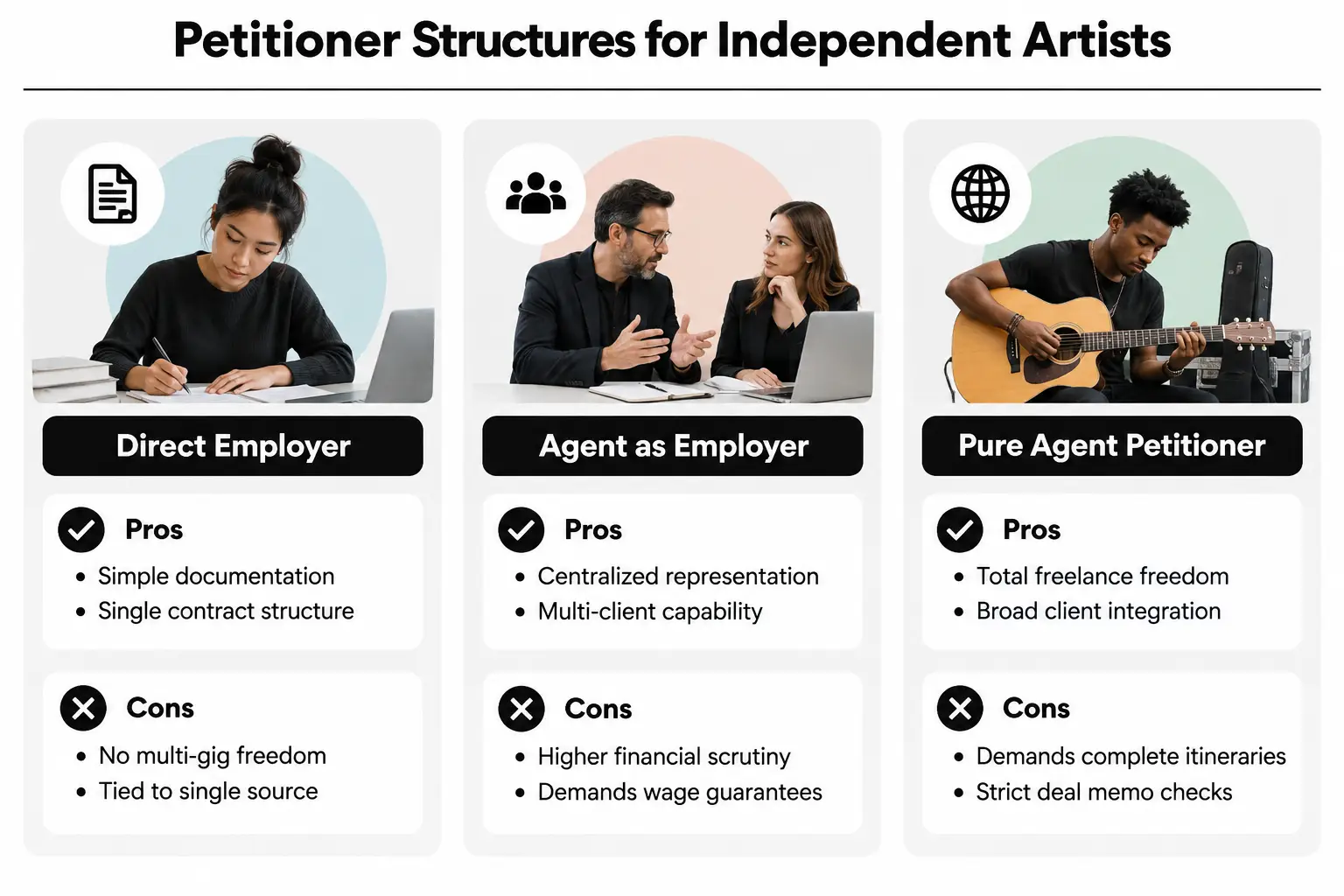
Petitioner structures for independent artists
-
Traditional Employer Petitioner: One company files the petition and serves as the primary employer. Pro: Only one employment contract is needed, without detailed paperwork for multiple clients. Con: The artist is legally limited to working for that sponsoring company alone.
-
Agent Performing the Function of an Employer: An established talent management firm files the petition. Pro: Supports multiple gigs under one representation arrangement. Con: Requires firm wage commitments and detailed evidence that the agency has an established industry presence.
-
Pure Agent Petitioner: An outside person or company files solely as the legal petitioner for multiple independent employers. Pro: Lets the artist work independently across dozens of freelance assignments. Con: Requires a complete itinerary, with a separate signed deal memo for every engagement.
Artists choosing a pure agent often work with an artist immigration lawyer to check that the agent agreement contains the authorization federal rules require. Learning what an agent petitioner does in an O-1 filing can help you decide how to structure your case.
Matching Agreement Formats to Creative Engagements
Creative fields hire people in different ways, and those differences matter during immigration review. Checking how agreements in your field document the work helps identify gaps before you file.
|
Creative Discipline |
Recommended Documentation |
Key Compliance Risk |
Mandatory Action |
|---|---|---|---|
|
Fine artists & sculptors |
Gallery representation deal memos |
No firm dates or exhibition commitments |
Specify exhibition spaces and sales representation periods |
|
Independent musicians |
Multi-venue performance agreements |
Open-ended dates without confirmed venue contracts |
Get signed venue booking confirmations or promoter summaries |
|
Commercial illustrators |
Project-based service agreements |
Vague milestones and changing project deliverables |
List deliverable quantities, fee schedules, and review periods |
|
Performers & actors |
Production company deal memos |
Hiring depends on outside film financing |
Set clear production dates and binding minimum compensation |
Practical Check: Deal memo dates should cover the full three-year visa period requested on Form I-129. Officers regularly shorten approvals to the dates that signed agreements actually support.
Through a confidential visa assessment, we help organizations and individual artists review whether their project agreements meet current standards for immigration review.
Maintaining Legal Status Across Itinerary Changes
Petition approval does not end the need to monitor your work arrangements. Freelance calendars change, but immigration rules place strict limits on changes to an approved program without authorization.
What to Check and When
Regular timeline reviews help independent artists and nonprofit arts organizations check compliance throughout the approved visa period:
-
Every 90 Days: Compare actual work dates with the itinerary submitted in the petition to check that the engagements match.
-
Prior to Adding New Clients: Check whether a new freelance assignment is a permitted minor change or requires an amended petition.
-
When Roles Change Substantially: Consult counsel about a formal amendment if your duties shift, for example, from background musician to musical director.
-
Prior to International Travel: Check your visa stamp and passport expiration, along with the travel documents needed for re-entry.
Knowing the filing steps and typical legal fees for a petition amendment helps you address unexpected schedule changes without risking your status. Our guide to immigration compliance strategies covers broader reviews of work programs.
Clear Answers on Creative Visa Petitions
Can I sign my own deal memos if I own a United States production company?
Federal rules prohibit foreign beneficiaries from signing their own agreements as the petitioner or employer. Someone independent must sign the project contracts and deal memos for the petitioning entity. That signer must be a corporate officer, manager, or separate third-party agent.
What happens if a project listed in my approved deal memo gets canceled?
Minor cancellations generally do not invalidate an approved visa if you remain active on other documented projects in your itinerary. Losing the main engagement that supported your status is a different matter. You may need to file an amended petition to stay compliant.
How specific do the compensation terms need to be on a deal memo?
Undefined payment language, such as “compensation to be discussed,” leads officers to reject deal memos. State a clear baseline payment, such as a flat project fee or day rate. Percentage-based pay must include a guaranteed minimum draw, meaning a minimum amount payable to the artist.
Can an informal email exchange serve as a legally valid deal memo?
Email exchanges can show an agreement only if they include all essential terms and confirm that both parties accepted them. Putting those points into a signed memo avoids unclear language that often prompts a Request for Evidence.
Are deal memos required for permanent residency petitions under EB-1A?
Applicants for an EB-1A extraordinary ability green card do not need a specific employer sponsor. They still must show plans to keep working in their field. Signed deal memos and future commitments provide strong evidence of planned artistic work in the United States.
Securing Your Independent Creative Status in New Jersey
At Abachi Law LLC, we prepare immigration filings for artists and creative businesses across New Jersey. That work means fitting real booking schedules to federal requirements. Performances in Newark, exhibitions in Jersey City, and independent productions in Princeton all need careful documentation.
Before filing an artist petition or updating an itinerary, check your paperwork against these requirements:
-
Confirm that your agent agreement authorizes representation for multiple independent third-party employers.
-
Check each deal memo for a clear scope of work, start and end dates, and specific payment terms.
-
Verify that the artist and hiring representative signed valid signatures at the time of the agreement.
-
Match union consultation requests to your artistic category and the work listed in your itinerary.
-
Review the entire calendar for coverage throughout the visa period you are requesting.
Contact Abachi Law LLC to review your project agreements and discuss the next filing deadline.
Legal disclaimer: This article is general information, not legal advice, and reading it does not create an attorney-client relationship. Laws change and differ from state to state, and past results do not guarantee a similar outcome. For advice about your own situation, speak with a licensed attorney at Abachi Law LLC.