
Moving from O-1B status to a green card requires careful filing dates and valid work authorization throughout the change. At our firm, we help creative professionals across New Jersey plan those steps. An approved I-140 petition alone does not give you permission to work or travel freely.
A new venue, an extra tour stop, or a poorly timed filing can leave performers caught between temporary status and permanent residence. Our immigration work covers New Jersey, from Newark and Jersey City to Princeton. We help independent artists and ensemble directors keep their immigration plans aligned with their work.
What’s Inside This Guide
-
Can You Transition from an O-1B to an EB-1A Without Gaps in Work Authorization?
-
How Do Artists Qualify for Extraordinary Ability Under Strict Federal Standards?
-
What Is the Difference Between O-1B and EB-1A Petitions for Creatives?
-
What Compliance Traps Cause Severe Audit Penalties During Tour Updates?
-
When Should You Hire an Entertainment Immigration Lawyer in New Jersey?
Can You Transition from an O-1B to an EB-1A Without Gaps in Work Authorization?
Yes, a direct move from O-1B status to an EB-1A extraordinary ability green card can avoid gaps in work authorization. Filing for adjustment of status while your temporary status remains active is part of that plan.
Your lawful status under an O-1B artist visa or another valid category must continue until you properly file Form I-485. That application goes to United States Citizenship and Immigration Services (USCIS).
O-1 status does not automatically cover your stay while permanent residence is being processed. Working after your initial petition expires without an approved Employment Authorization Document (EAD), or work permit, violates federal immigration law. Before setting filing dates, review our immigration services for other options that may fit your body of work.
How Do Artists Qualify for Extraordinary Ability Under Strict Federal Standards?
EB-1A applicants must show sustained national or international acclaim through a major international award or at least three of USCIS’s ten regulatory criteria. Under 8 CFR § 204.5(h), officers review documentary evidence to decide whether an artist has reached the very top of their field.
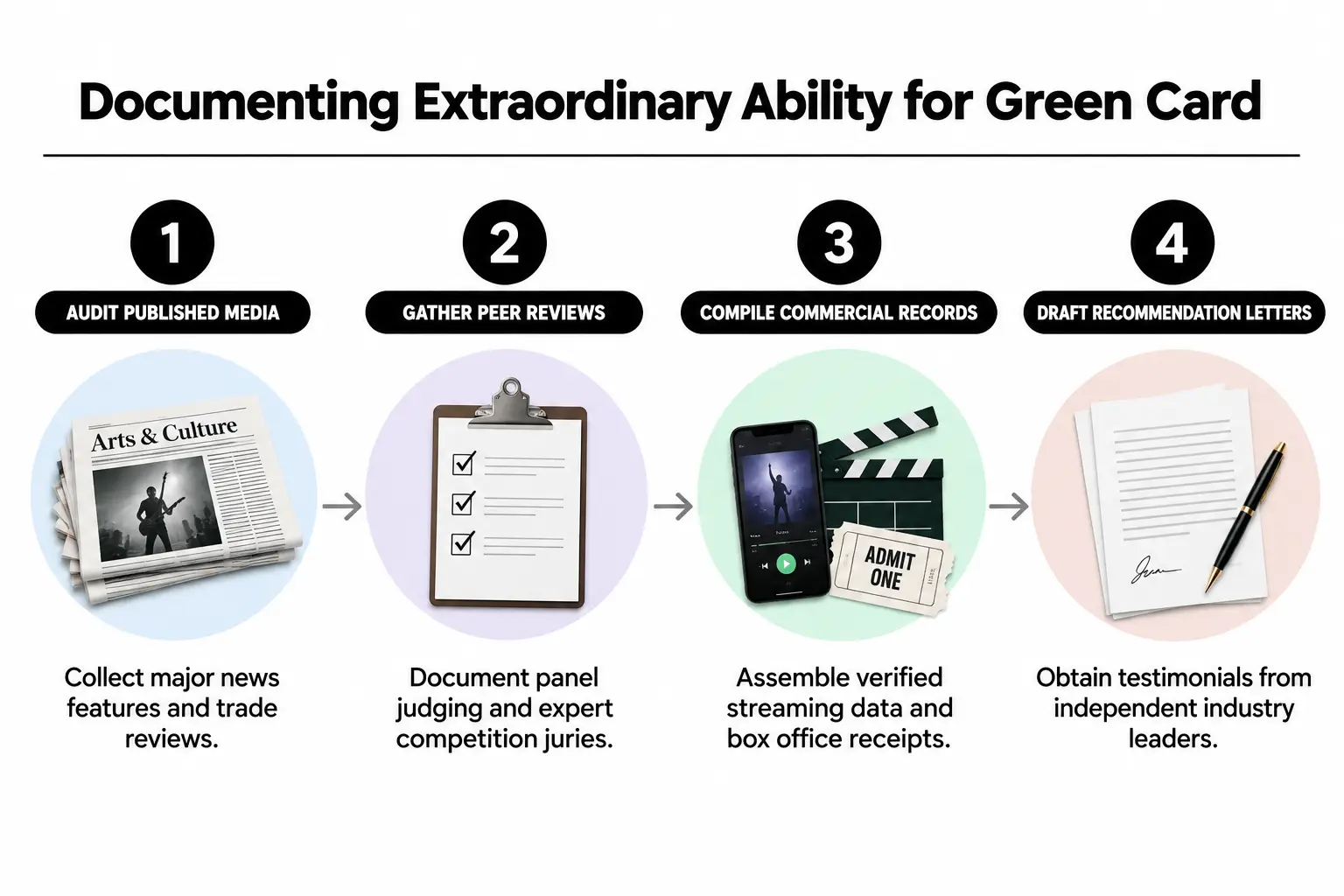
Documenting extraordinary ability for a green card application
A strong record usually draws on several types of evidence, rather than relying on a résumé alone:
-
Commercial success: Box office receipts, record sales, streaming figures, or major critical reviews that document high commercial achievement.
-
Critical roles: Contracts, programs, and letters that establish leading or critical roles with organizations known for their distinguished reputations.
-
Media coverage: Published material about you and your work in major professional publications or mainstream media outlets.
-
Exhibition record: Records of gallery exhibitions that show your work was displayed at distinguished venues.
-
Judging others’ work: Evidence that you evaluated other people’s work as a panel judge, curator, or competition juror.
Collaborative work needs particular care. Creative directors and other visual professionals must show their own contribution to the finished work, separate from the team’s achievements. The same need for individual evidence applies to independent fine artists pursuing permanent residence through EB-1A.
What Is the Difference Between O-1B and EB-1A Petitions for Creatives?
An O-1B petition requires distinction, meaning prominence in the field, and an employer or agent must file it. EB-1A requires extraordinary ability, shown through sustained acclaim at the top of the field, but lets artists file for themselves. A green card grants permanent residence, while O-1B remains temporary and tied to specific itinerary dates.
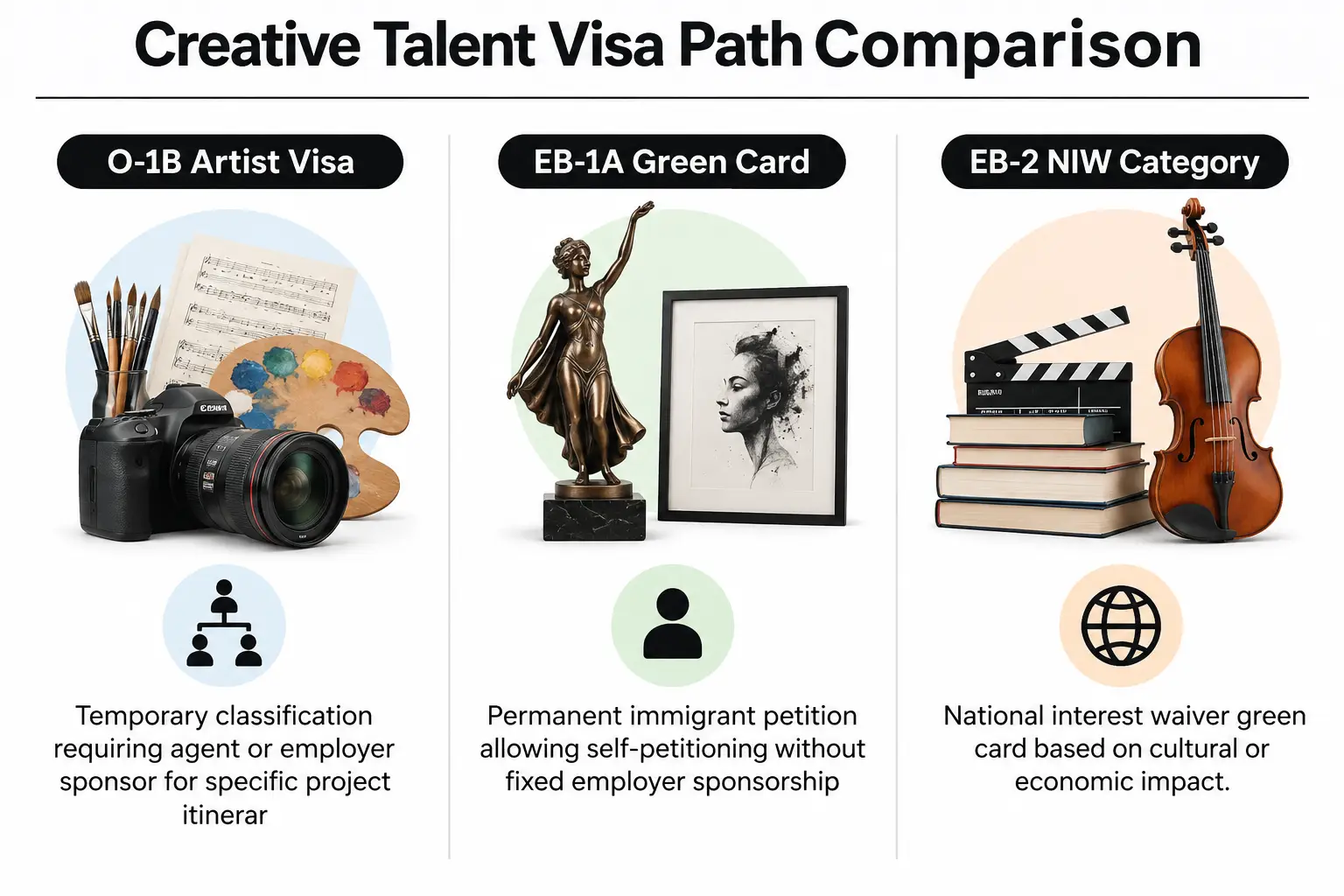
Comparing temporary visas and permanent residence for creative professionals
|
Immigration category |
Best for |
Main pitfall |
|---|---|---|
|
O-1B nonimmigrant visa |
Freelancers booking defined tours or project schedules with a U.S. agent sponsor. |
Changing an itinerary without authorization or adding unlisted dates without an amended petition. |
|
EB-1A permanent residence |
Established creatives seeking permanent residence without an employer sponsor. |
Failing the Kazarian final merits test, the overall review of your evidence, despite meeting three regulatory criteria. |
|
EB-2 NIW alternative |
Artists whose proposed work has substantial merit and national importance to the United States. |
Showing personal artistic brilliance instead of broad, measurable cultural or economic impact. |
Our analysis of changes to artist immigration rules explains how scrutiny differs across creative categories. The choice between temporary status and permanent residence affects how you write upcoming performance agreements, so it belongs in the discussion before those contracts are signed.
How Long Does the EB-1A Artist Green Card Process Take?
Initial review of an EB-1A Form I-140 generally takes fifteen calendar days to several months, depending on premium processing. If your priority date is current in the Department of State Visa Bulletin, you may file Form I-485 at the same time. That adjustment application usually takes further months for background checks and biometrics, such as fingerprints.
Processing estimates can change when an agency falls behind or asks for more evidence:
-
Agency delays: Backlogs differ by service center and consular post, so another applicant’s timeline may not match yours.
-
Evidence questions: Understanding recent USCIS guidance on immigration cases can help you prepare for challenges to your evidence early.
-
Requests for evidence: A request for evidence (RFE) needs prompt attention. A proper response helps keep your petition active and moving through review.
Artists often seek legal help if an officer questions their international standing rather than interpret the administrative standards alone. Incomplete RFE responses routinely lead to denials and lost filing fees, making the response an important part of the case.
What Compliance Traps Cause Severe Audit Penalties During Tour Updates?
Calling foreign performers independent contractors or unpaid volunteers does not let organizers bypass work authorization rules. That mistake can expose venues and organizers to federal civil penalties during Form I-9 employment-verification audits. Immigration and Customs Enforcement (ICE) and other federal authorities enforce rules against hiring performers without proper authorization.
Before changing a tour: Check whether an amended I-129 petition is required before adding a concert date or substituting guest soloists. Skipping that check can invalidate an artist’s status and trigger severe workplace enforcement fines.
For musical ensembles traveling across New Jersey, the petitioning agent must keep tour itineraries up to date. An unexpected Atlantic City festival booking or an added Montclair concert cannot simply count as casual freelance work. Poorly handled contracts can also create status gaps that threaten a later talent-based green card application.
When Should You Hire an Entertainment Immigration Lawyer in New Jersey?
Consult an entertainment immigration lawyer before changing from temporary status or expanding a performance itinerary. An inquiry from immigration authorities also calls for legal review. Counsel checks that your contracts and performance schedules meet federal standards, along with advisory letters from peer groups or unions.
Local counsel can help New Jersey performers, gallery artists, and production companies address venue management and compliance issues in the state’s production hubs. At Abachi Law LLC, we advise on how those local work arrangements fit federal immigration requirements. That guidance protects status and future residency for architects pursuing EB-1A and musicians booking regional stages.
Straight Answers on Talent Visas and Permanent Residency
What is the gold card eb1 classification?
“Gold card EB1” is an informal industry term for the self-petitioned EB-1A extraordinary ability green card. It refers to the ability to apply without labor certification or employer sponsorship. For more on recent regulatory debates, read our explanation of the proposed gold card and its effect on EB-1 and NIW applicants.
Can an artist get a green card through marriage instead of talent petitions?
Marriage to a U.S. citizen or lawful permanent resident gives an artist another route to permanent residence. This route often moves faster than talent-based categories. Our guide to marriage green card interviews and scrutiny explains the interview requirements.
How does an artist sponsor a green card for spouse and children?
An EB-1A applicant’s spouse and unmarried children under 21 qualify for derivative permanent resident status, meaning they qualify through the artist’s application. Filing their adjustment applications together allows family members to receive work permits and travel authorization at the same time.
Can foreign artists enter on a tourist visa to perform at charity events?
Foreign artists cannot perform on a B-1/B-2 visitor visa or ESTA visa waiver if the activity counts as public entertainment. Donating the fee or performing without pay does not change that rule. A lawful public performance requires the appropriate U.S. artist visa classification.
Plan Your Legal Transition with Abachi Law LLC
Production dates and immigration filings need to work together. Through our practice, we help solo artists and touring ensembles across New Jersey handle immigration requirements without compromising ongoing work. Production companies can also get guidance on the filings tied to their schedules.
Bring your upcoming work dates to a confidential consultation about an expedited tour visa, an O-1B renewal, or an EB-1A petition. For help with freelance artist representation or a permanent residence application, contact Abachi Law LLC to schedule your consultation.
Legal disclaimer: This article is general information, not legal advice, and reading it does not create an attorney-client relationship. Laws change and differ from state to state, and past results do not guarantee a similar outcome. For advice about your own situation, speak with a licensed attorney at Abachi Law LLC.