
A Request for Evidence (RFE) on a petition for talent-based visas usually means the evidence needs work. U.S. Citizenship and Immigration Services (USCIS) may find it incomplete or poorly organized. The officer may also need a clearer link between your creative work and the legal requirements.
Simple administrative updates do not always call for a lawyer. But an RFE that questions your sustained acclaim or commercial standing usually needs legal attention to address the risk of denial.
Creative careers rarely follow a standard corporate path. Streaming numbers and festival screenings can show real success, yet connecting them to legal criteria takes careful work. With a production deadline, tour date, or expiring status ahead, legal support can be critical to protecting your ability to keep working.
What’s Inside This Guide
-
Evaluating Your Petition: Independent Response vs. Legal Representation
-
Essential Questions to Clarify During Your Initial Case Review
-
Critical Warning Signs When Consulting Immigration Practitioners
-
Jurisdictional realities and Federal Processing for New Jersey Creatives
-
Resolving Core Artist Visa and Extraordinary Ability Inquiries
Evaluating Your Petition: Independent Response vs. Legal Representation
Government notices carry different risks. An updated translation or missing signature may be something you can handle yourself, provided you follow every instruction. But a challenge to your extraordinary ability evidence raises harder legal questions. So does a dispute over a consultation letter from your peer group.
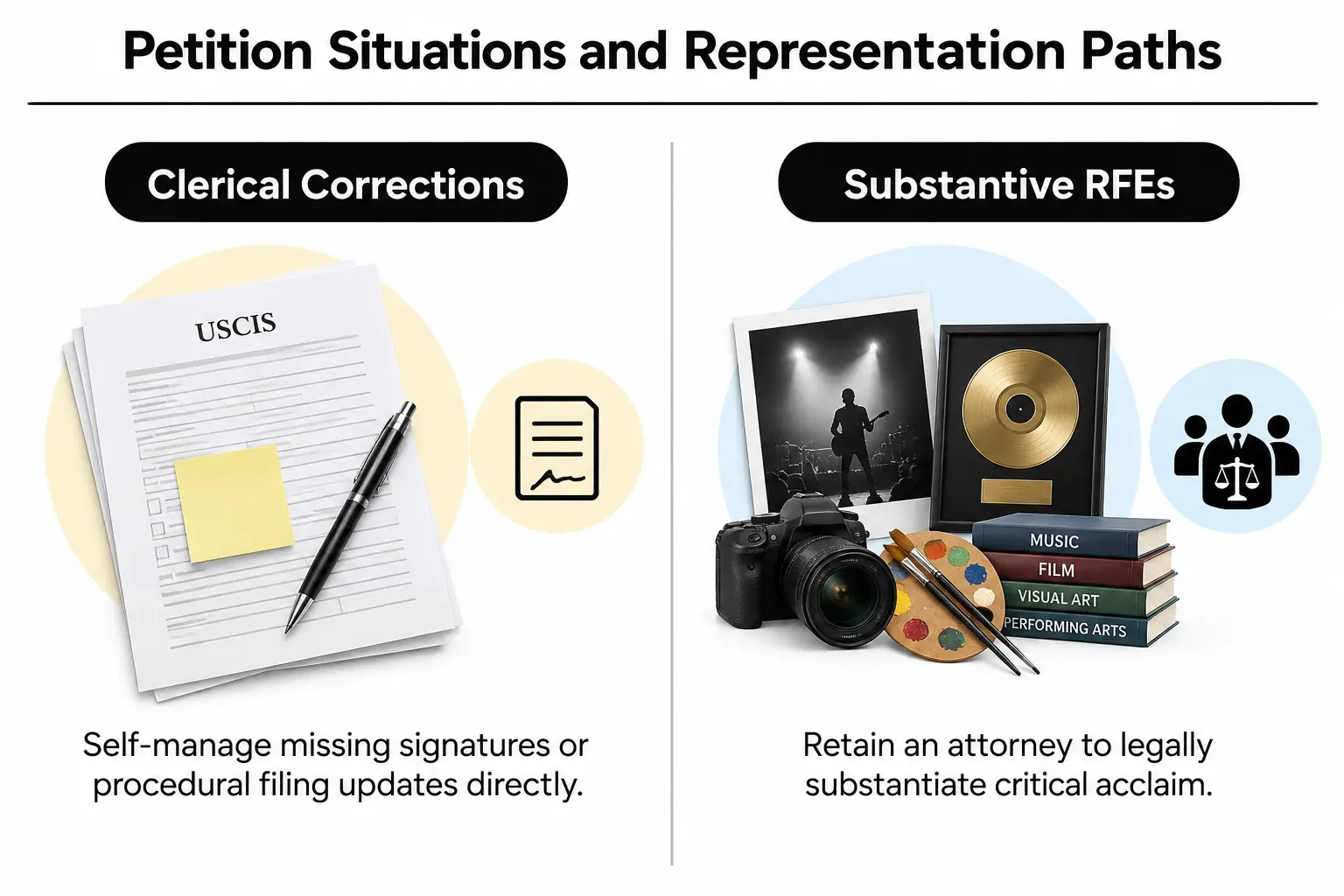
Petition situations and representation options
|
Petition Situation |
Lawyer Recommended? |
Primary Procedural Reason |
|---|---|---|
|
Technical filing omissions, such as missing duplicate copies or recalculated fees |
Optional |
This is an administrative issue, rather than a judgment about your artistic work or legal eligibility. |
|
USCIS questions lead or starring roles in distinguished events |
Yes |
Evidence of festival standing, box office results, or critical acclaim needs to be tied to the legal standard. |
|
An officer rejects a labor union’s peer advisory opinion letter |
Yes |
Counsel must address the letter or explain the union’s authority, such as SAG-AFTRA or AFM, under federal rules. |
|
A freelance itinerary is questioned because there is no permanent employer |
Yes |
Contracts with the petitioning agent need to support legally authorized work for multiple clients. |
|
Moving from student work authorization (F-1/OPT) to an independent artist classification |
Yes |
Careful timing matters when moving to professional status, to avoid gaps that could lead to unlawful presence. |
Knowing the difference can save you legal fees on a basic clerical request. It also helps you recognize when a response needs more than corrected paperwork, before you put a complex petition at risk.
How an Attorney Systematically Dismantles a USCIS Challenge
An effective response connects the documents to the law and addresses each concern in the notice. For a performer, that means more than sending another stack of press clippings. Your lawyer needs to explain why the evidence answers the officer’s objections under the applicable rules.
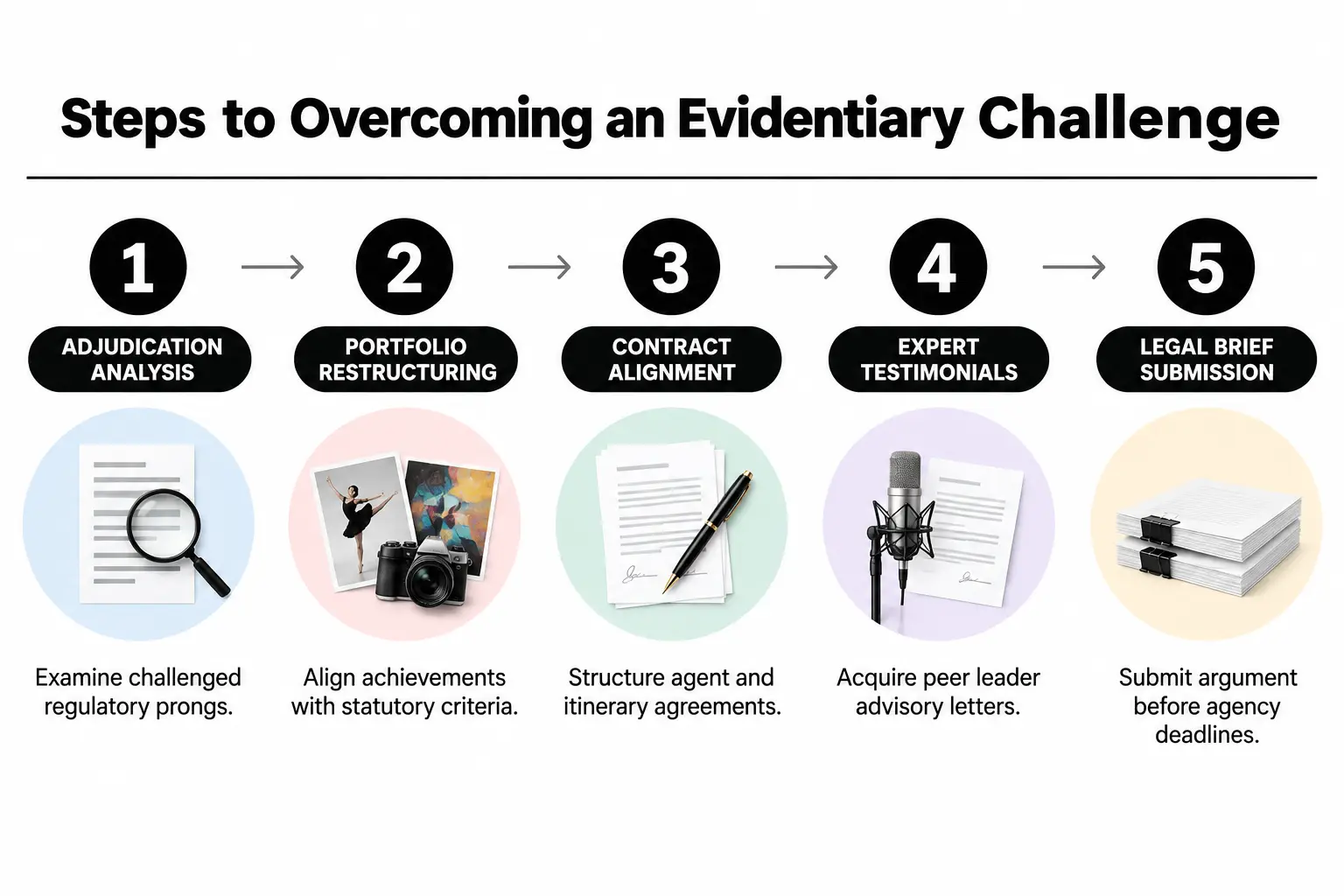
Steps for addressing an evidence challenge
-
Reviewing the notice: Your attorney checks each challenged requirement against the officer’s comments, relevant legal decisions, and agency policy manuals. This establishes what the response must address.
-
Organizing the portfolio: Counsel gathers new evidence and puts achievements in context. Spotify streams, gallery invitations, or smaller festival selections need verifiable benchmarks that explain their industry significance.
-
Checking agency and contracts: The lawyer addresses disputes about the petitioner’s role in a temporary talent visa case. Freelance contracts and performance itineraries must support the proposed work arrangements.
-
Preparing expert letters: Detailed advisory letters are drafted and obtained from recognized industry leaders. They should explain your specific contributions, rather than rely on broad praise that says little about your work.
-
Writing the legal brief: Counsel explains how each exhibit meets the relevant requirements, then prepares the response for submission within the agency’s strict filing deadline.
That process applies to O-1A and O-1B matters, as well as work with a P-1A visa lawyer for athletes. Each step should address an actual concern raised by the agency.
Selecting the Right Advocate for Creative Acclaim Matters
Look beyond practices that mainly handle family petitions or standard corporate transfers. Creative resumes need a different kind of review. Counsel should understand how to assess a career built on projects and recognition rather than conventional job titles.
Direct Experience with Creative Visas
Industry knowledge helps an attorney connect less conventional achievements to federal standards. An EB-1 lawyer should know how to present a self-petition for permanent residence. For musicians, counsel also needs to understand touring schedules and contract evidence, including the requirements that apply to P-1B petitions.
Ask about recent entertainment cases and how the lawyer supports awards that are respected within your field but unfamiliar outside it.
Communication and Response Protocols
Filing deadlines leave little room for missed messages. Find out if you will hear directly from your attorney or through a paralegal when an important notice arrives. Clear communication also matters when addressing DHS fixed-stay rules for F, J, and I visas, or OPT adjustments before work authorization expires.
Fee Structure Clarity
Before hiring an O-1 visa lawyer, ask what the quoted fee covers. Firms generally charge a flat fee for filing a petition, with a separate flat or hourly fee for complex RFE work. Get the expected costs in writing, including translations and courier charges, along with any filing fees, before work starts.
Verifying Professional Standing
Attorneys appearing before USCIS must hold a license and remain in good standing with a state licensing board. Check the relevant state regulator’s records, such as the New Jersey Courts Attorney Search. That check helps confirm that your lawyer has no disciplinary suspension or administrative restriction on practice.
Essential Questions to Clarify During Your Initial Case Review
Use the consultation to find out how the firm would approach your evidence. Specific questions reveal more than general assurances about experience. Listen for answers that show an understanding of your field, rather than a routine plan to fill out forms.

Discussing a creative portfolio at the first consultation
-
How do you handle petitions lacking mainstream awards? The answer should explain how the attorney uses other evidence, such as critical reviews or significant commercial success, to support the case.
-
What is your approach to structuring agent-petitioner itineraries? Ask how the arrangement covers freelance work for several clients and addresses the risk of unauthorized employment claims.
-
Who will draft my testimonial and peer advisory letters? Find out how much legal drafting the firm provides and what writing, if any, it expects you to do yourself.
-
How do you track USCIS policy updates? Look for familiarity with changes that affect your case, including recent changes to immigration case review inside and outside the United States.
-
What is the realistic timeline for gathering exhibits? Discuss how the time needed to prepare the petition fits your tour schedule or upcoming production and screening dates.
-
What additional fees apply if an RFE is issued? Get a clear explanation of the extra costs if the officer asks for more evidence after filing.
Critical Warning Signs When Consulting Immigration Practitioners
Visa problems can put your work and income under pressure. That stress can make aggressive sales tactics harder to question. Watch how a firm discusses risk and fees before you trust it with your immigration record.
-
Promises about the decision: At Abachi Law LLC, we assess the evidence and prepare the legal response. The government decides the case, and no lawyer can promise a favorable result.
-
Pressure to sign immediately: Be wary of demands for a signature or a large non-refundable retainer before the firm has carefully reviewed your portfolio.
-
Unchanged template letters: Generic, fill-in-the-blank recommendations can raise fraud concerns at federal service centers. Letters need to reflect the actual work and the writer’s knowledge of it.
-
Unclear fee agreements: Do not proceed without a defined scope of work. The agreement should say exactly which services are covered if an RFE arrives.
Protect your creative record: Never let anyone invent credits or festival honors, or inflate your pay. Misrepresentation can lead to a permanent bar from entering the United States.
Jurisdictional Realities and Federal Processing for New Jersey Creatives
Immigration law is federal, so eligibility standards do not change with your lawyer’s location. An artist consulting counsel in Houston faces the same legal requirements as one working with a lawyer in New York City or New Jersey.
Regional courts, including the federal district court in New Jersey, sometimes hear cases seeking agency action or appeals involving naturalization. Routine petitions for talent-based visas, however, go through specialized USCIS service centers, such as Vermont or Nebraska.
New Jersey puts creatives close to major markets while offering local places to work. Studios and performing arts centers, along with independent production hubs, serve professionals across Jersey City, Newark, and Montclair.
Local counsel handling an artist’s EB-1 case or another creative visa matter can coordinate with organizations across the tri-state area. That work includes communicating with regional venues and agent sponsors, as well as the labor organizations involved in your petition.
Resolving Core Artist Visa and Extraordinary Ability Inquiries
What is an artist visa and how do I qualify?
An artist visa usually means the temporary O-1B classification for extraordinary achievement or distinction in the arts. Qualification calls for detailed evidence across at least three legal criteria. Examples include leading roles in distinguished productions, major publication reviews, commercial success, or substantial testimonials from recognized experts.
What are the primary paths for immigration for artists seeking permanent residence?
EB-1A is the main immigrant route for artists with sustained national or international acclaim, without an employer sponsor. Our comparison of permanent and temporary options for creatives explains the difference. Consider the demanding EB-1A evidence requirements alongside the shorter-term benefits of O-1 status when deciding which route fits your plans.
How does the legal standard for a talent-based visa work for freelance performers?
Freelance performers seeking a visa based on their talent can use a recognized U.S. agent to file the petition without a single full-time employer. The agent arrangement allows multiple gigs and production contracts to be grouped together. Those engagements can form a single approved three-year itinerary.
Why does USCIS extraordinary ability present such a high bar in RFE notices?
Officers use a two-part review: first they check the individual requirements, then they assess whether the evidence as a whole shows sustained acclaim. Meeting individual criteria does not end that review. For guidance on organizing your portfolio, our firm’s articles explain how evidence can establish distinction under agency standards.
Can international musicians tour the country using an artist visa usa?
Yes, international musicians can use an O-1B petition for soloists or a P-1B petition for established entertainment groups to tour multiple U.S. cities. Before entry, the petition must include signed performance contracts and confirmed venue dates. Union advisory letters are also part of the required documentation.
How should a creative prepare to hire lawyer for artist rfe response work?
Start by gathering a copy of the original petition and the complete RFE notice, including its exact postmark date. Collect any new evidence you have received since filing as well. Bringing those records to a lawyer handling your artist RFE response saves valuable preparation time within the standard response window.
Securing Your Strategic Case Assessment with Abachi Law LLC
At Abachi Law LLC, we focus on visas for creative professionals, including performers and directors as well as designers and visual artists. Our job is to connect genuine achievements to the petition’s legal requirements. Seeking affordable representation should not mean giving up careful legal analysis of your work.
During an initial consultation, we review your portfolio and any RFE notice, check upcoming filing deadlines, and talk candidly about your career plans.
We assess how your record fits the O-1 and EB-1 extraordinary ability requirements and explain our fees before you commit. That discussion includes our selective fee-refund terms for qualifying matters, which concern fees, not a promise of approval.
To arrange a detailed case evaluation before your next production, tour, or work authorization deadline, contact our office.
Legal disclaimer: This article is general information, not legal advice, and reading it does not create an attorney-client relationship. Laws change and differ from state to state, and past results do not guarantee a similar outcome. For advice about your own situation, speak with a licensed attorney at Abachi Law LLC.