Independent content creators can qualify for an O-1B talent visa if their work shows sustained acclaim and commercial distinction in digital media arts. You do not need traditional Hollywood credits, network broadcasts, or major industry awards just to have your petition considered.
Evidence of distinction is what matters for creative talent petitions. Digital reach, press coverage, and paid brand contracts need to show how your work meets the requirements for an O-1 or EB-1 visa.
At Abachi Law LLC, we help creators across New Jersey who work outside traditional studios, including videographers, podcasters, and digital performers. Our job is to connect their online results to the legal criteria used by United States Citizenship and Immigration Services (USCIS).
What’s Inside This Guide
-
Can Digital and Social Media Creators Legally Qualify for an O-1B Visa?
-
How Can Freelancers Structure an O-1 Itinerary Without One Permanent Employer?
-
O-1A, O-1B, or P-1: Which Classification Fits Hybrid Digital Work?
-
What Are the Realistic Government Fees and Filing Timelines?
-
What Mistakes Most Frequently Trigger an O-1B Request for Evidence?
-
Can an O-1B Nonimmigrant Visa Lead Directly to an EB-1A Green Card?
Can Digital and Social Media Creators Legally Qualify for an O-1B Visa?
Yes, independent creators qualify for the O-1B artist visa when their work meets at least three regulatory criteria showing distinction in the arts.
Federal immigration rules in 8 CFR 214.2(o) define distinction as a high level of achievement, with skill and recognition substantially above the ordinary. That definition covers digital video directors and livestream hosts. Motion graphic designers and influential social media personalities also fall within this creative category.
Examiners do not reserve artistic visas for theatre performers or gallery painters. A YouTuber or podcaster with a recognized audience, paid sponsorships, and mainstream coverage meets the evidence baseline. An O-1 visa attorney reviews analytics and licensing agreements to document commercial success. Peer testimonials can support that record without traditional credits such as playbills.
Raw digital numbers need context. Viral clips alone are not enough. USCIS needs objective evidence that your viewership reflects a leading role in distinguished productions. Independent trade reviews or major media features must support that connection.
How Can Freelancers Structure an O-1 Itinerary Without One Permanent Employer?
Freelance creators can use an established agency or designated U.S. agent to file an O-1 petition instead of one full-time employer. Federal rules allow an agent to file for multiple employers or independent contracts. The petition must include a complete itinerary, meaning a schedule of upcoming work, covering up to three years.
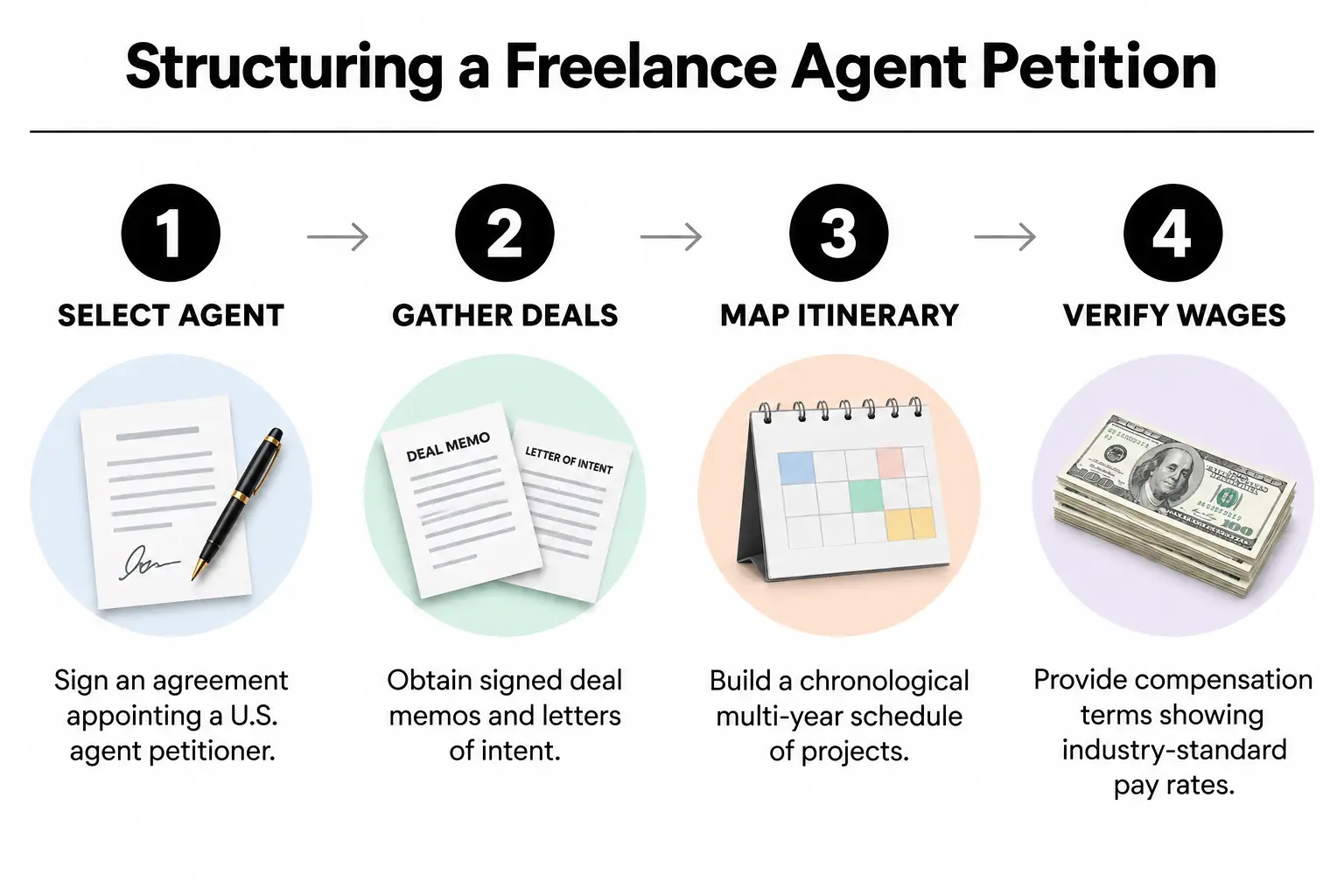
Organizing a freelance agent petition
Working on several projects is normal for independent creators around Jersey City, Hoboken, and Newark. We help clients put those commitments into legally binding deal memos and letters of intent, rather than leaving the work schedule undocumented.
It helps to understand what the petitioner is responsible for before building your schedule. Gaps between production dates can lead to a shorter approval period, so the filing needs to account for the full period requested.
For an agent-based petition covering independent digital work, gather these records before filing:
-
Agency representation agreement: A formal contract giving an agency or business entity authority to act as your petitioner before immigration authorities.
-
Multi-client deal memos: Signed agreements or letters of intent describing upcoming brand campaigns, production shoots, podcast episodes, or ongoing editing work.
-
Chronological work itinerary: A dated schedule showing each project and studio location, with expected deliverables throughout the requested visa period.
-
Documented wage standards: Evidence that each contract pays an amount consistent with industry standards for established creative professionals.
O-1A, O-1B, or P-1: Which Classification Fits Hybrid Digital Work?
Digital storytellers, visual artists, and entertainers generally fit the O-1B category. O-1A applies to creators whose work focuses on software engineering, technical analytics, or educational science.
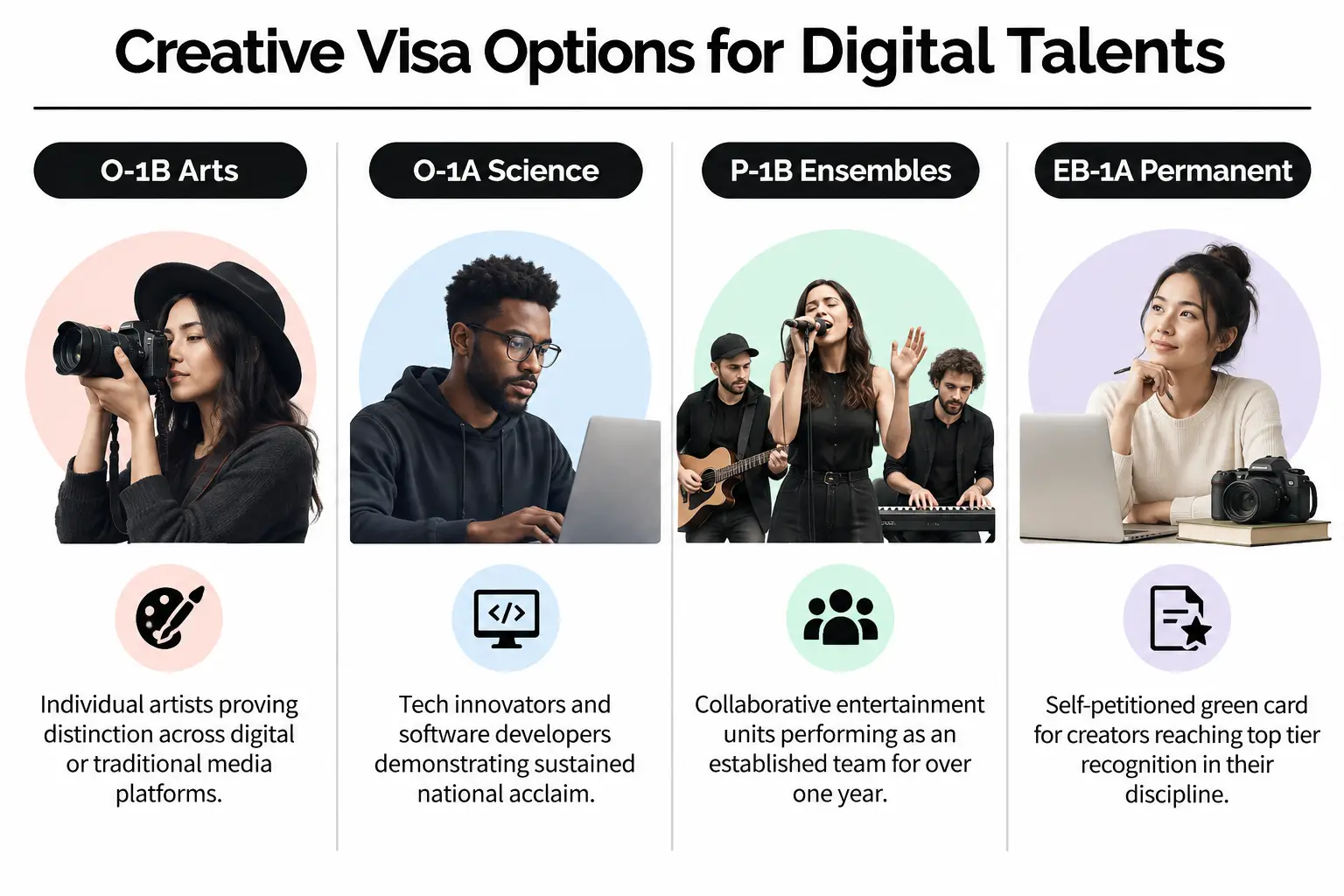
Comparing visa options for digital creators
Choosing the right category changes what you must prove. O-1A requires evidence that you belong to the small percentage at the very top of your field. O-1B arts petitions use the somewhat more flexible standard of distinction.
Mixed creative and technical work can make that choice difficult. A game streamer who builds streaming tools may seem suited to O-1A, but entertaining an audience fits O-1B. Touring ensembles and collaborative digital groups face a similar choice. Performers researching visas for musicians often discuss group classifications and individual petitions with a P-1 visa attorney.
|
Visa classification |
Best suited for |
Points to consider |
|---|---|---|
|
O-1B (Arts / Digital Media) |
Content creators, video editors, directors, animators, and digital performers |
Requires evidence of artistic distinction, press articles, and advisory union letters |
|
O-1A (Business / Tech / Science) |
Software designers, tech founders, and creators of new platform algorithms |
Uses a stricter evidence standard requiring national or international acclaim |
|
P-1B (Entertainment Groups) |
Established digital production groups, collaborative music acts, and bands |
Requires at least 75% of members to have performed together for over one year |
|
EB-1A (Permanent Residency) |
Established creators ready to move from temporary visas to a green card |
Requires extensive records of sustained national or international acclaim |
Filing under the wrong category can leave your evidence poorly matched to the legal requirements. Reviewing the O-1B criteria helps you build a petition around your creative work rather than relying only on business figures.
What Are the Realistic Government Fees and Filing Timelines?
Preparing an O-1B petition typically takes several months. Budget for mandatory USCIS filing fees as well as union consultation costs and legal expenses. Employers and agents pay the base Form I-129 petition fee plus the mandatory Asylum Program Fee.
Premium Processing is an optional service for a faster initial review. It carries an extra government fee and requires USCIS to issue a decision or formal notice within 15 business days.
Legal fees are only part of the total cost. Before hiring an O-1 visa lawyer, account for consultation letters from labor unions such as SAG-AFTRA or IATSE. Foreign press may need translation, and document preparation adds to the budget.
Our firm offers clear flat-fee pricing. We also explain the terms of our fee refund policy for qualifying O-1 and EB-1 cases, including its conditions and scope.
Standard processing generally takes two to six months, depending on the service center’s workload. Before submission, allow about four to eight weeks to assemble your evidence. That preparation includes gathering reference letters and obtaining union peer reviews.
What Mistakes Most Frequently Trigger an O-1B Request for Evidence?
USCIS most often issues a Request for Evidence (RFE) when supporting records lack credibility or context. Common problems include unverified paid publicity and follower counts without comparisons. Vague letters that never explain the creator’s artistic contribution also draw questions. Links to self-published posts or paid promotional articles will lead examiners to discount those exhibits entirely.
Each piece of evidence needs an independent, credible source. Pair analytics reports with expert commentary rather than leaving download totals or viewing numbers to speak for themselves. The commentary must explain how your results compare with industry averages in your geographic market.
Evidence check: Do not submit social media screenshots or raw view counts without third-party audit reports or independent press confirming their commercial significance.
Detailed supporting letters help address an officer’s doubts about your work. Our guide to testimonial letters explains the standards these statements need to meet. Use those standards to avoid repetitive, formulaic language that examiners regularly question.
Can an O-1B Nonimmigrant Visa Lead Directly to an EB-1A Green Card?
O-1B status does not automatically become permanent residency. Still, evidence gathered for that petition provides a foundation for a self-petitioned EB-1A extraordinary ability green card. Some employment-based categories require labor certification and long-term employer sponsorship. EB-1A lets exceptional creative professionals petition for themselves without an employer.
EB-1A requires substantially more proof than the O-1B distinction standard. Applicants must document sustained national or international acclaim. Extensive records must also show that others in the field recognize their achievements.
During an EB-1 review, a lawyer examines critical reviews and major awards alongside high pay and original artistic contributions. Those records must satisfy at least three of ten regulatory criteria under Kazarian, the legal framework for a rigorous two-part review.
Many foreign creators keep O-1B status in New Jersey while building their records with mainstream awards, major press features, and commercial contracts. Filing an EB-1A petition becomes a reasonable next step once their professional standing reaches the top tier of their field.
Direct Answers to Common Creative Visa Questions
Can I work for companies not listed on my initial O-1 itinerary?
Unlisted paid work requires an update to your immigration filing. O-1 authorization covers only the work described in the itinerary and petitioner agreements submitted to USCIS. For significant new clients or brand sponsorships, your agent must submit an amended petition or file a concurrent petition. That filing keeps the new work within your immigration authorization.
Do view counts and subscriber numbers satisfy the critical role criterion?
View counts alone do not meet the critical role criterion. Documentation must show how your content directly increased growth, audience size, or revenue for a distinguished production, platform, or sponsor. The figures need to establish your contribution, not simply the size of your following.
Is a college degree in film or media production required for an O-1B visa?
No academic degree is required for an O-1B extraordinary ability visa in the arts. Approval depends on your documented professional work and industry acclaim, along with commercial success. Formal academic credentials do not replace that record.
What union provides consultation letters for digital content creators?
Your main type of creative work determines where to request a peer advisory opinion. Common organizations include SAG-AFTRA, the International Alliance of Theatrical Stage Employees (IATSE), and the Directors Guild of America. Where no union covers a digital specialty, an authoritative peer group or recognized trade association can provide the required consultation letter.
How does policy guidance affect creators working in multiple media formats?
Recent policy updates require officers to consider non-traditional evidence as a whole. Creators working across streaming, podcasting, and commercial video should understand how the new USCIS memo affects immigration cases. That guidance helps them present varied portfolios for review without treating each format as a separate career.
Planning Your Creative Talent Petition in New Jersey
At Abachi Law LLC, we help international creative professionals across New Jersey prepare petitions to live and work in the United States. That work includes organizing records and checking the documentation behind each claim. We then explain how the evidence relates to the legal requirements.
Our team reviews your portfolio and proposed sponsorship arrangement to assess which filing route fits your work. Contact our team to discuss your creative portfolio and plan your visa petition.
Legal disclaimer: This article is general information, not legal advice, and reading it does not create an attorney-client relationship. Laws change and differ from state to state, and past results do not guarantee a similar outcome. For advice about your own situation, speak with a licensed attorney at Abachi Law LLC.