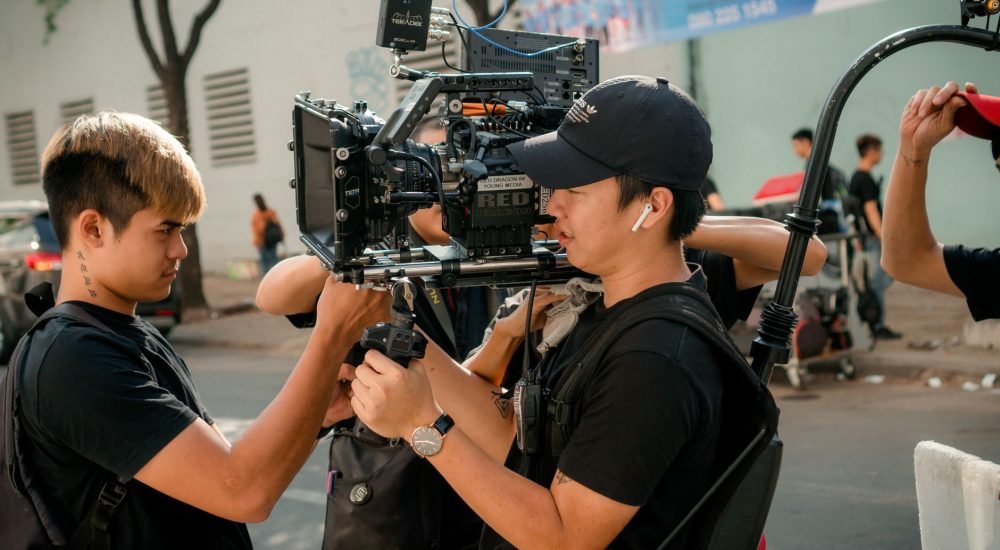

Foreign film crews shooting in New Jersey need to show why their work requires an O-2 support visa tied to an O-1B artist. Camera operators and other essential crew need more than a job offer. Our comparison of P-1A and O-1A visas for athletes covers related filing distinctions.
For most core technical teams, an O-2 petition alongside the principal director’s or lead actor’s O-1B petition is the safest route. That approach depends on proof of an established working relationship.
Bringing crew who have never worked with the principal talent creates a serious problem. United States Citizenship and Immigration Services (USCIS) routinely denies these petitions, leaving productions to hire local workers instead.
Federal rules for talent-based visas set strict standards. The lead creative must meet the O-1B visa criteria, but supporting crew do not need international acclaim. Their evidence must show why their skills and experience with that artist are essential to finishing the production on schedule.
What’s Inside This Guide
-
The Real Cost of Crew Filing Mistakes on Production Deadlines
-
Choosing Between O-2 Support Petitions and Alternative Visa Categories
-
Coordinating Union Advisory Opinions Across Production Stages
-
Building a Rock-Solid Evidentiary Packet for Film Crew Members
-
Straight Answers on Bringing Foreign Film Crews to the Garden State
The Real Cost of Crew Filing Mistakes on Production Deadlines
Production calendars leave little room for paperwork errors. Assuming a business visitor visa covers technical work at Jersey City or Newark soundstages can stop a shoot indefinitely. Misusing visitor status puts crew at risk of border refusals and federal work authorization violations. Productions can also face steep contractual penalties from local distributors.

Production crew reviewing paperwork and filming schedules
Separate O-1 applications can create another costly mistake. Gaffers, focus pullers, or boom operators rarely have the individual media coverage needed for an O visa for artists. Filing them as independent extraordinary ability applicants invites Requests for Evidence (RFEs), which are formal requests for more documentation. Responding takes time and adds to the budget.
Production rule: An O-2 petition depends on a direct connection to an approved O-1 principal artist or an O-1 petition filed at the same time.
Choosing Between O-2 Support Petitions and Alternative Visa Categories
Before we prepare paperwork, we need to identify the visa category that fits each person’s actual work. Federal law treats independent talent differently from essential support personnel. Business visitors fall into a separate category with limits that matter on a film set.
Selecting the Right Filing Classification for Your Production Roster
An O-1B may fit a director, principal actor, or renowned cinematographer, but it is not suited to general crew. Standard short-term visitor status does not permit productive labor on set. Sorting out those differences before filing helps avoid choosing a category that cannot cover the person’s work.
|
Option |
Where to start |
What to watch |
|---|---|---|
|
O-2 essential support |
Key department heads and long-time personal assistants working with the principal director or actor. |
Needs proof of continuity from earlier production work or unique technical expertise directly tied to the shoot. |
|
Individual O-1B |
Renowned cinematographers, celebrated costume designers, or award-winning editors. |
Demands substantial evidence. Each applicant must independently prove national or sustained international acclaim. |
|
P-1S support personnel |
Support staff accompanying internationally recognized athletic groups or musical performers. |
Reserved for athletic competitions or musical ensembles, rather than motion picture or television sets. |
|
B-1 in lieu of H-1B / O |
Location scouting, preliminary contract meetings, or festival screenings only. |
Does not permit hands-on technical operations, production equipment handling, or shooting work. |
Producers booking several shoots often need to understand how talent-based visas fit their full roster. With a complicated crew list, an experienced immigration attorney can assess each person’s category before filing. That review addresses classification problems that could otherwise lead to administrative rejection.
Matching Crew Roles to Indispensable Skill Requirements
Motion picture and television O-2 personnel must have critical skills and experience with the O-1 principal. Those qualifications cannot be readily matched by a U.S. worker. Film productions face a stricter standard here than live stage productions.
USCIS requires an established working relationship or evidence that substantial production work began abroad and needs to be completed in the United States.
Our job is to explain why that particular collaboration matters. Five years spent filming an auteur director’s distinctive visual style gives a camera operator a basis for meeting this standard. A sound technician newly hired in the production’s home country rarely has the same basis.
|
Production situation |
Recommended approach |
What to avoid |
|---|---|---|
|
Sequel or ongoing series filmed partly abroad |
O-2 based on earlier production work and the need to preserve continuity in the story. |
Replacing primary crew mid-production without documenting their earlier work on scenes filmed abroad. |
|
Specialized proprietary camera or visual effects rig |
O-2 based on critical technical knowledge tied to the lead artist’s working methods. |
Relying on standard equipment skills that domestic union camera operators use every day. |
|
New commercial with a newly assembled crew |
Hire local crew through standard union or independent contracts. |
Filing O-2 petitions for technicians who only met the director shortly before production began. |
|
Actor’s personal dialogue or dialect coach |
O-2 supported by years of private training and a specific artistic working relationship. |
Relying on general coaching experience without shared credits or an established history with the actor. |
Practical check: Gather shared credits from call sheets, screen credits, and overseas pay stubs before drafting the support petition.
Coordinating Union Advisory Opinions Across Production Stages
O-2 filings require advisory letters from the relevant industry groups. Some artist petitions need only one consultation, but motion picture and television support petitions require two. One comes from the labor union representing the crew member. The other comes from an employer management organization.

Union consultation channels for film crews
New Jersey productions generally deal with national groups such as the International Alliance of Theatrical Stage Employees (IATSE). The Directors Guild of America (DGA) is another. These unions review the effect on domestic employment, so records of the crew member’s prior working relationship matter.
|
Crew role |
Consultation channel |
Evidence to review |
What it shows |
|---|---|---|---|
|
Cinematography crew, including camera operators and focus pullers |
IATSE International and local camera chapters. |
Shared reel samples, equipment certifications, and call sheets documenting years of work together. |
How replacing that crew member would disrupt the principal director’s visual style. |
|
Production design and art department heads |
Art Directors Guild (IATSE Local 800) and producer management groups. |
Concept sketches, lookbooks, and festival awards for past projects with the lead artist. |
Continuity between development abroad and the later U.S. shoot. |
|
Hair, makeup, and prosthetics technicians |
Make-Up Artists & Hair Stylists Guild (IATSE Local 706). |
Actor continuity logs, specialized appliance molds, and personal service agreements. |
The lead performer’s need for consistent physical appearance across takes. |
Read our explanation of the petitioner’s role for details on how an employer or production agent signs and sponsors these filings. Producers bringing a whole creative group can also review our guide to visas for musical artists. It explains other entertainment visa categories and the rules that apply to touring groups.
Building a Rock-Solid Evidentiary Packet for Film Crew Members
Every claim in the petition needs supporting records. Calling someone an “exceptional assistant” does not explain their qualifications and invites an RFE. We organize the evidence so an officer can check the person’s work history and see why the production needs them.
-
Check the principal’s status: Confirm that the primary artist has an approved O-1B petition or will file at the same time as the crew.
-
Gather proof of past work together: Use call sheets, production contracts, and stills of screen credits to establish when each crew member worked with the principal.
-
Get detailed testimonial letters: Ask the director, lead producer, and principal talent for signed statements explaining exactly why that crew member is essential.
-
Request the consultations: Send complete petition copies to the relevant labor and management organizations for their required advisory opinions.
-
Prepare Form I-129 and the itinerary: Include a filming schedule that identifies the New Jersey locations and gives dates and call times.
Counsel’s check: Keep job titles consistent across letters, call sheets, and petitions, since conflicting titles often delay processing.
For a closer look at the evidence creative filings need, see our guide to writing testimonial letters. The same principle applies to crew petitions: specific accounts of someone’s work carry more weight than broad praise.
Managing Legal and Government Filing Expenses Efficiently
Your budget needs room for legal fees as well as union consultation and government filing charges. Costs rise quickly with several crew members. Planning the filings together helps keep funds focused on essential crew rather than avoidable paperwork errors.
|
Budget level |
What to prioritise |
What to question |
|---|---|---|
|
Lean indie feature ($) |
O-2 filings for true department heads, with secondary crew hired through local New Jersey production networks. |
Sponsoring entry-level production assistants or general grips with little history of working with the principal. |
|
Mid-tier commercial / series ($$) |
Reviewing premium processing for principal talent and key crew while planning filings around location deadlines. |
Separate, uncoordinated crew filings that duplicate union consultation fees. |
|
Major studio production ($$$) |
Grouped crew petitions supported by detailed location itineraries and backup production schedules. |
Rushing to meet shoot dates by filing before the labor union consultation responses arrive. |
Producers weighing the cost of an O-1 visa lawyer should consider the work shared by principal and support petitions. Handling both under one filing plan avoids duplication. Regular communication between production coordinators and counsel also helps manage legal costs through each stage of shooting.
Straight Answers on Bringing Foreign Film Crews to the Garden State
Can foreign film crew members apply for an O-2 visa on their own?
No. O-2 status depends on the principal O-1 artist. Crew members cannot self-petition, and their filings must connect directly to an approved O-1 petition or one pending at the same time.
Can I qualify for O-1 without major awards as a department head?
Yes. Department heads such as cinematographers or art directors can qualify for O-1B without major awards by meeting at least three regulatory criteria. General crew without their own record of acclaim should pursue O-2 support status instead.
How do artists qualify for an O-1 visa compared to their O-2 crew?
Lead artists need evidence of distinction or extraordinary achievement, including critical reviews, lead roles, and commercial success. Supporting crew do not need public acclaim. Instead, their evidence must establish specialized technical skills and a long-standing working relationship with that artist.
Can an O-2 crew member work for multiple productions while in New Jersey?
Only work authorized by the specific petition itinerary is permitted. Freelancing for unrelated local productions is not allowed. Once the approved production ends, crew members cannot stay in the United States to take work with other companies.
What happens if our O-1 lead actor or director leaves the production?
Because the crew’s O-2 status depends on the principal artist, their work authorization ends if that artist leaves or terminates the contract. Support personnel must then leave the country or obtain an amended petition before continuing to work.
Planning Your Crew Visas with Abachi Law LLC
At Abachi Law LLC, we help production teams prepare crew filings under federal immigration rules. Our review addresses scheduling risks and union consultation requirements, along with issues that can hold up processing. Before submitting petitions for your camera, sound, or design team, work through these steps:
-
Check that the principal director or actor has an approved or actively pending O-1B petition.
-
Collect call sheets, pay records, and screen credits showing past work together.
-
Get written consultation letters from the relevant labor unions and management organizations.
-
Confirm the filming dates and locations at New Jersey production facilities.
-
Arrange a case review to compare filing plans with production deadlines.
For a review of your upcoming production’s crew filings, contact our legal team at Abachi Law LLC.
Legal disclaimer: This article is general information, not legal advice, and reading it does not create an attorney-client relationship. Laws change and differ from state to state, and past results do not guarantee a similar outcome. For advice about your own situation, speak with a licensed attorney at Abachi Law LLC.