

Gaps in bookings and contracts that conflict with your itinerary can delay or derail a US tour petition. As you budget for entertainment contract drafting, check that booking dates and deal memos match the immigration paperwork. Errors here can lead to serious delays or an outright denial.
We cover another part of the evidence process in our post on writing testimonial letters for an O-1B arts petition.
Below, we explain five itinerary mistakes that can derail a touring visa application. Managers and production companies can use these checks to get the legal groundwork in place before filing for foreign talent.
Your first major decision is how to structure the contracts: direct venue agreements, third-party presenter deals, or filings through an agent. For New Jersey shows, from Newark arenas to Red Bank theatres, the itinerary must match the underlying deals. It also needs to meet union standards and the rules for the requested visa category to support timely approval.
What’s Inside This Guide
-
3. Inconsistent Engagement Locations and Mismatched Venue Deals
-
5. Missing Contingency Terms and Unbudgeted Schedule Amendments
-
Direct Comparison of Tour Itinerary Pitfalls and Legal Safeguards
1. Unaccounted Booking Gaps and Extended Downtime
For an O visa for artists or a P-1 ensemble petition, the itinerary sets the time frame for your legal US stay. Federal rules at 8 CFR § 214.2 govern admission for temporary workers. Officers examine the days between shows to assess whether an artist maintains valid status throughout the requested period.
Long gaps between dates, often exceeding 30 to 60 days without contracted creative work, routinely trigger a Request for Evidence (RFE). They can also shorten the approved petition period. Artists may want unscheduled months to write or network, but examiners require an active event calendar or verified promotional periods to approve the full term.
Practical check: Explain calendar breaks longer than four weeks with formal agreements covering work during the pause, such as recording sessions, rehearsals, or promotional campaigns.
2. Filing Without Enforceable Performance Agreements
Tour managers sometimes submit itineraries supported only by tentative emails or verbal holds. In visa filings for musical artists, those arrangements leave a serious gap in the evidence. United States Citizenship and Immigration Services (USCIS) requires concrete proof that an actual agreement backs every listed show.

Reviewing performance riders at a desk
Non-binding deal memos lack the enforceability officers expect when approving multi-year tours under a P-1 petition. An entertainment immigration lawyer checks that contracts satisfy USCIS wage requirements and spell out the performer’s duties. The documents must also name the sponsoring entity correctly, rather than leaving its role unclear.
Unsigned letters of intent are a particular problem. USCIS examiners frequently treat them as plans rather than confirmed work, which can sharply reduce the petition period or lead to denial of the requested classification.
3. Inconsistent Engagement Locations and Mismatched Venue Deals
Each itinerary needs to show where the artist will perform and in what order. Addresses on Form I-129 must match those in the production contracts, or officers will immediately question the filing. Shows in Camden, Atlantic City, or Morristown need the same attention to detail, including the room and presenter information.
Legal teams price contract drafting partly by checking how each gig defines the relationship between the promoter, venue, and performer. Unclear employer or agent roles can complicate an EB-1 assessment or a comparison of EB-1A and O-1B options. That matters especially if you plan to seek permanent residency based on distinguished creative work.
Contracting rule: Every rider, the document adding specific performance terms, must match your Master Tour Summary on venue capacity, payment schedule, and the production company’s legal identity.
4. Skipping Union Consultation Letters and Advisory Reviews
Nearly all major creative petitions require a written advisory opinion from the appropriate labor organization or peer group before filing. Performers preparing an O-1 visa petition often underestimate how closely unions examine tour itineraries. Missing a required peer review stops processing before the petition materials reach a government examiner’s desk.
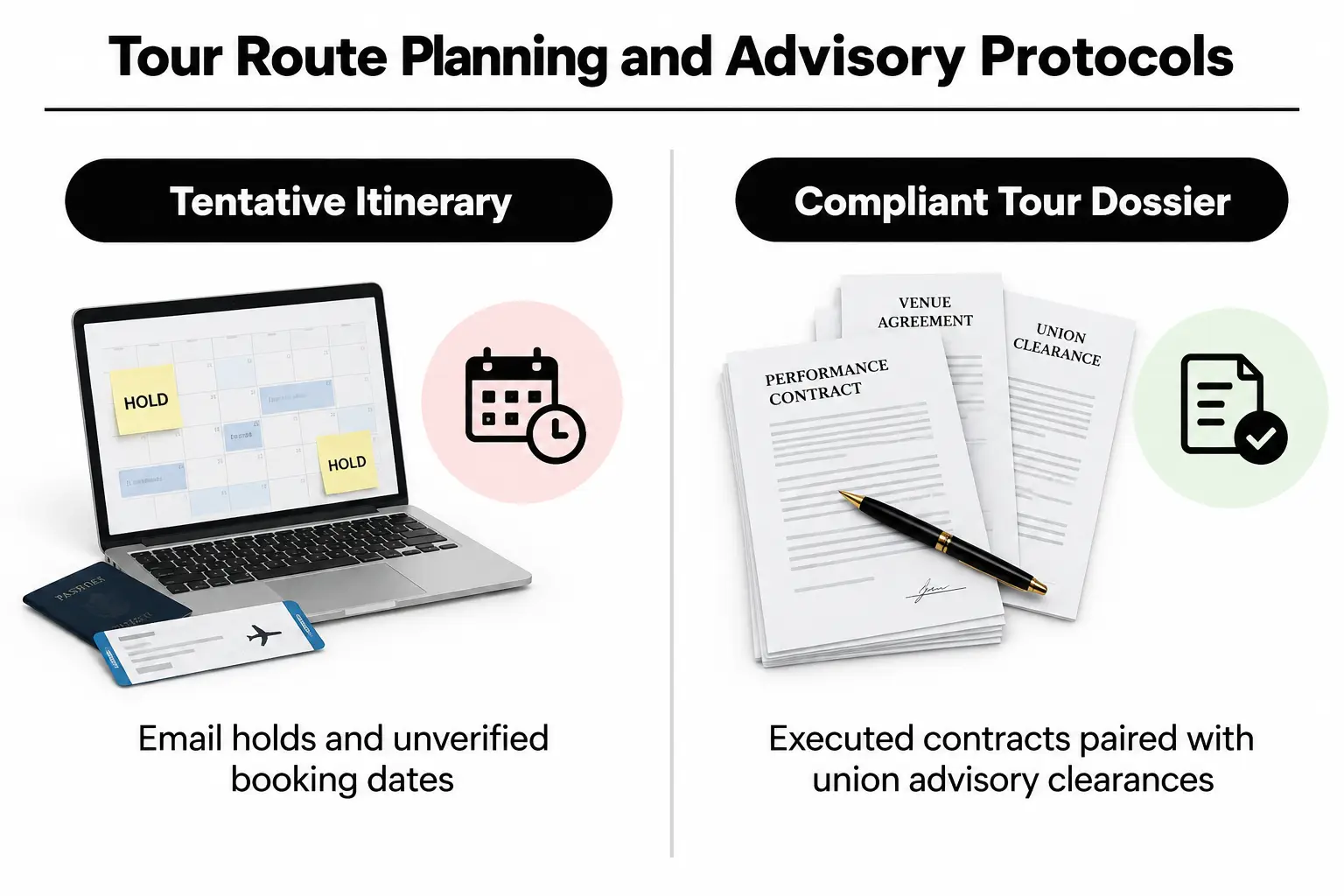
Planning the tour route and advisory review
Your field determines which union should review the filing. Examples include the American Federation of Musicians (AFM) for instrumentalists and the American Guild of Musical Artists (AGMA) for stage performers. A union may issue a negative opinion if pay conflicts with collective bargaining rates or the schedule leaves out rehearsal allowances.
Advisory check: Obtain consultation letters well before filing by checking that contract pay meets or exceeds the standard union minimum at every tour stop.
5. Missing Contingency Terms and Unbudgeted Schedule Amendments
Booking changes and weather delays regularly force tours to change routes, as do operational problems. Without contract terms covering those changes, artists risk immediate compliance violations when they alter concert stops mid-tour. Before changing an O-1 itinerary, you need to understand when immigration rules require a petition amendment.
Contracts need force majeure terms, which address extraordinary events beyond the parties’ control, along with deferred payment and visa contingencies. Without them, delayed approvals can leave the production team facing serious financial liability. Counsel drafting agreements for O-1 tours can include termination terms that protect against breach if consular delays disrupt border crossings.
Major itinerary changes also create administrative work. Replacing a regional tour leg or adding entirely new venue partners often requires a formal petition amendment, with further filing fees and processing time. Those costs belong in the tour budget alongside the expense of revising the contracts.
Direct Comparison of Tour Itinerary Pitfalls and Legal Safeguards
Checking for problems early gives production managers and counsel time to prepare supporting contracts or clarify dates before filing. This table shows how common itinerary errors affect a petition and which contract changes address them. It also compares the regulatory work involved in each fix.
|
Itinerary problem |
Review risk |
Contract fix |
Regulatory burden |
|---|---|---|---|
|
Booking gaps > 30 days |
Shorter approval period or RFE |
Add verified recording or rehearsal agreements |
Low |
|
Unsigned booking holds |
Outright denial of unconfirmed dates |
Sign binding performance riders |
Moderate |
|
Mismatched sponsoring entities |
Questions about agent authorization |
Make agent-petitioner contract terms consistent |
High |
|
Missing peer group reviews |
Immediate petition rejection |
Submit materials to the designated labor unions |
High |
|
Mid-tour schedule changes |
Status violations or unauthorized work |
Include visa contingency and amendment riders |
Moderate |
Production houses reviewing a legal fee quote for tour contracts should also keep federal enforcement trends in view. Our guide to the new USCIS memo’s effect on immigration cases explains changes affecting cases inside and outside the United States.
Tour Petition Questions Answered by Entertainment Counsel
What factors determine your entertainment contract drafting price?
Cost depends on the number of agreements and the rules that apply across different jurisdictions. Preparing agent-petitioner riders alongside performance contracts adds drafting work. A single-venue agreement takes fewer hours, while a multi-state tour with independent presenters requires more negotiation to meet immigration evidence standards.
Can I use festival booking confirmations instead of executed contracts?
An official, signed festival performance agreement meets petition requirements. Informal holds and early email exchanges do not meet USCIS standards, even if the parties expect the booking to proceed. Officers require formal confirmation of pay, stage call details, venue identity, and the specific dates of the engagement.
What is the difference between an employer and an agent petitioner on tour filings?
Employers file for performers they hire directly for a defined internal engagement. Agent petitioners file on behalf of multiple independent venues or presenters across the country. An authorized agent needs full representation agreements, plus individual contracts between the artist and every venue on the tour itinerary.
How do I secure an advisory opinion if my genre has no dedicated union?
Federal rules allow artists without a dedicated union to submit their petition materials to an appropriate peer group or umbrella arts organization. That body must have recognized expertise in the artist’s field. An experienced practitioner can help identify which qualified organization meets the advisory requirement under federal guidelines.
Structuring Sound Tour Petitions for Creative Professionals
International tours need contracts that work with federal immigration rules, not agreements drafted in isolation from them. At our firm, we help creative teams protect their rights and prepare petition documents that reflect the work they have booked.
That legal work can mean drafting riders for several venues or clarifying the cost of contract preparation before you book another tour leg. Counsel helps you address those questions while the agreements are still being put together.
From our offices serving artists and ensembles across New Jersey, attorney Shervin Abachi structures contracts and aligns them with petitions while advocating for international talent. To review your upcoming tour dates and agreements, contact Abachi Law LLC to arrange a detailed contract review consultation.
Legal disclaimer: This article is general information, not legal advice, and reading it does not create an attorney-client relationship. Laws change and differ from state to state, and past results do not guarantee a similar outcome. For advice about your own situation, speak with a licensed attorney at Abachi Law LLC.