
An O-1B petition for a multi-venue tour needs a schedule that connects your U.S. bookings into one documented plan. United States Citizenship and Immigration Services (USCIS) requires evidence linking each date and venue to work arranged before filing. That applies even when separate promoters book your performances across several states.
Without a consistent filing plan, artists risk shorter approval periods, gaps in work authorization, or closer scrutiny of their schedules. Building a portfolio that meets the O-1B visa criteria helps you focus on preparing for performances rather than defending your right to work in the country.
What’s Inside This Guide
-
Building Your Tour Portfolio from Deal Memos to Peer Consultations
-
Comparing Tour Structures: Agent Petitioners, Direct Venues, and Ensemble Visas
-
Mid-Tour Schedule Modifications and Long-Term Status Maintenance
Anatomy of an Approved Multi-Venue Tour Schedule
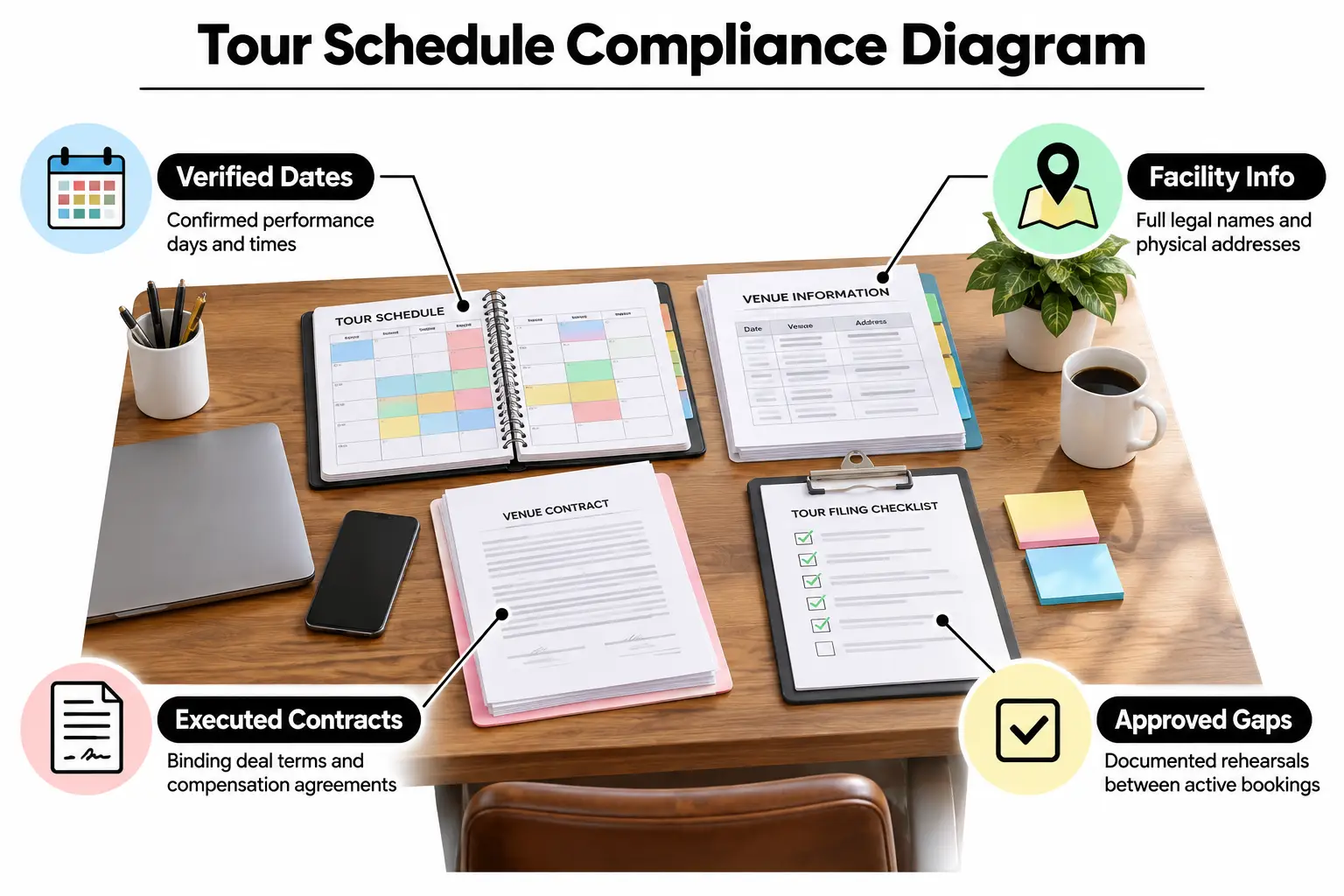
Federal immigration rules require a detailed event schedule when you seek an O visa as an artist without one year-round corporate employer. Your itinerary brings separate performances, promotional work, and recording sessions into a single requested approval period. Each booking needs to fit that documented schedule.
Tour schedule requirements
Artists booking work in Newark, Jersey City, or Asbury Park need to show why they will be in the United States. For musicians and other performers, that itinerary provides evidence of legitimate work throughout the requested stay.
Officers reviewing a multi-city tour look for these details in the filing:
-
Verified engagement dates: Give the exact start and end dates for each booking. Avoid open-ended periods or blocks of time based on work that might happen.
-
Facility identity and address: Include the formal name, street address, and contact details for every performance hall, festival site, or studio where you will work.
-
Documented deal terms: Supply signed contracts, letters of agreement, or deal memos. These documents must establish what you will do and how you will be paid.
-
Permissible gap periods: Account for reasonable breaks between performances, including planned travel, rehearsals, and time spent on creative production.
Getting these details right helps protect your temporary visa petition from a shortened approval period or requests for extensive additional evidence.
Building Your Tour Portfolio from Deal Memos to Peer Consultations
Preparation starts months before your production flights leave. Collect deal memos, or written booking summaries, from every venue host, festival promoter, or production partner. Each must state the performance terms, pay, and production duties. Together, these agreements support the dates you request for approval, up to the statutory maximum of three years.
Next, your filing team gathers records that meet the O-1B evidence requirements. Those records include press coverage, commercial distribution data, critical reviews, and letters from established industry figures. The team submits this evidence with Form I-129, the petition form, directly to the appropriate federal service center.
The Peer Group Letter Requirement Most Producers Overlook
Before an officer reviews your tour itinerary, the filing must include a written advisory opinion from an appropriate U.S. labor organization or peer group.
For performers, groups such as the American Federation of Musicians (AFM) or International Alliance of Theatrical Stage Employees (IATSE) must review credentials and proposed work. Obtain the required union letters before filing. Missing letters will stop agency processing until that requirement is addressed.
Comparing Tour Structures: Agent Petitioners, Direct Venues, and Ensemble Visas
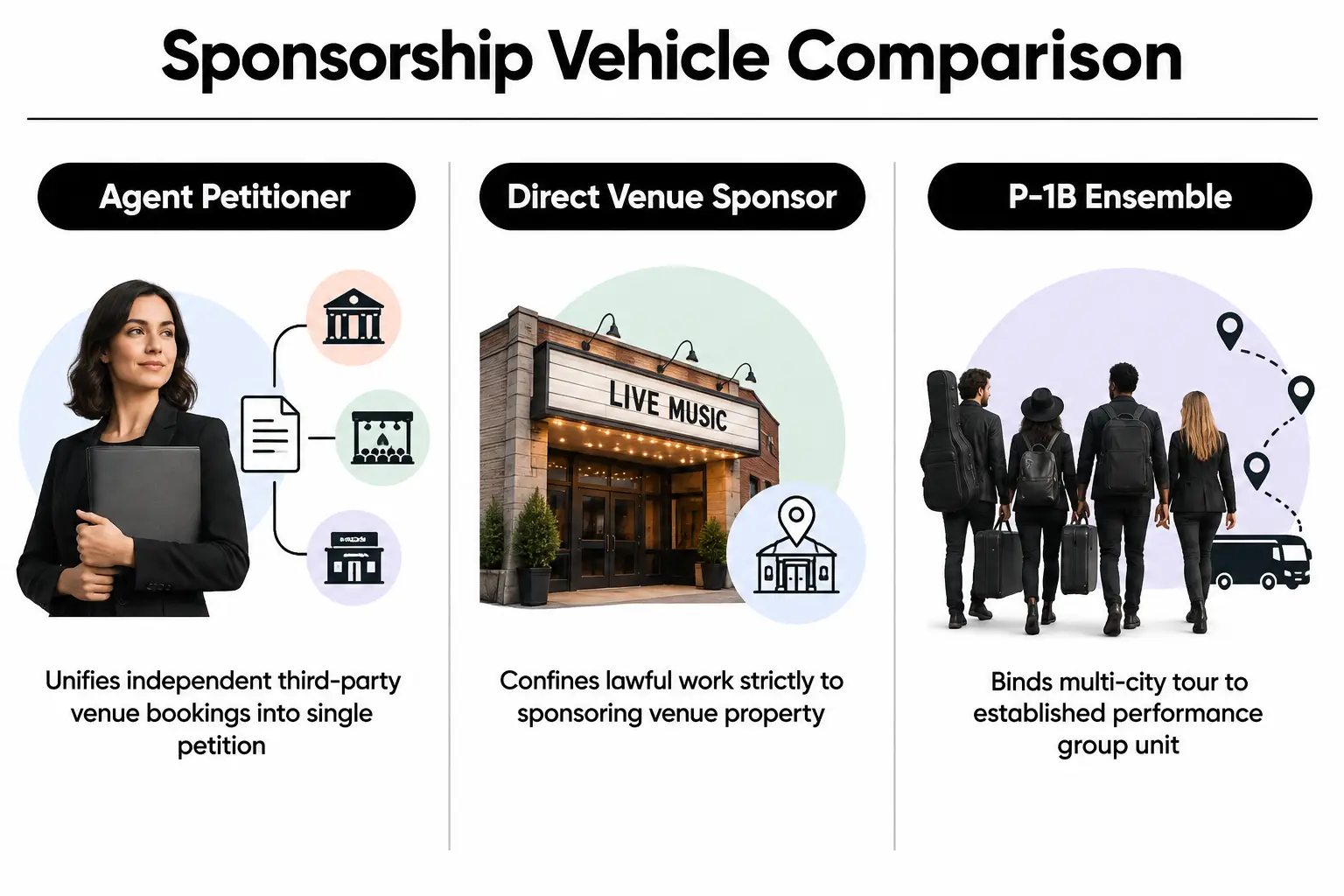
Your filing structure needs to fit the work on your calendar. A single venue can sponsor a short residency, while a cross-country tour needs an arrangement that covers separate bookings. Comparing an individual O-1 visa with group options early helps soloists, directors, and other performers avoid expensive filing changes later.
Comparing sponsorship options
|
Petition structure |
Primary petitioner |
Itinerary flexibility |
Filing overhead |
Who it fits |
|---|---|---|---|---|
|
O-1B through a U.S. agent |
Authorized agency or management business |
High: covers multiple independent venues |
$$ |
Solo acts, featured soloists, freelance directors |
|
Single-venue O-1B |
Production hall or festival organizer |
Low: limited to engagements at the host facility |
$ |
Resident artists, limited single-venue productions |
|
P-1B entertainment group |
U.S. promoter, agent, or sponsoring host |
Moderate: covers an intact group on a defined tour |
$$$ |
Established bands, dance troupes, orchestra units |
Choosing among these routes is a core part of managing visa compliance across multiple venues. Your representation must match both the tour schedule and federal requirements.
Sponsorship Frameworks for Independent Touring Talent
Foreign artists cannot file these petitions for themselves under federal law. For independent appearances, the person or business filing on your behalf determines how much scheduling flexibility you have.
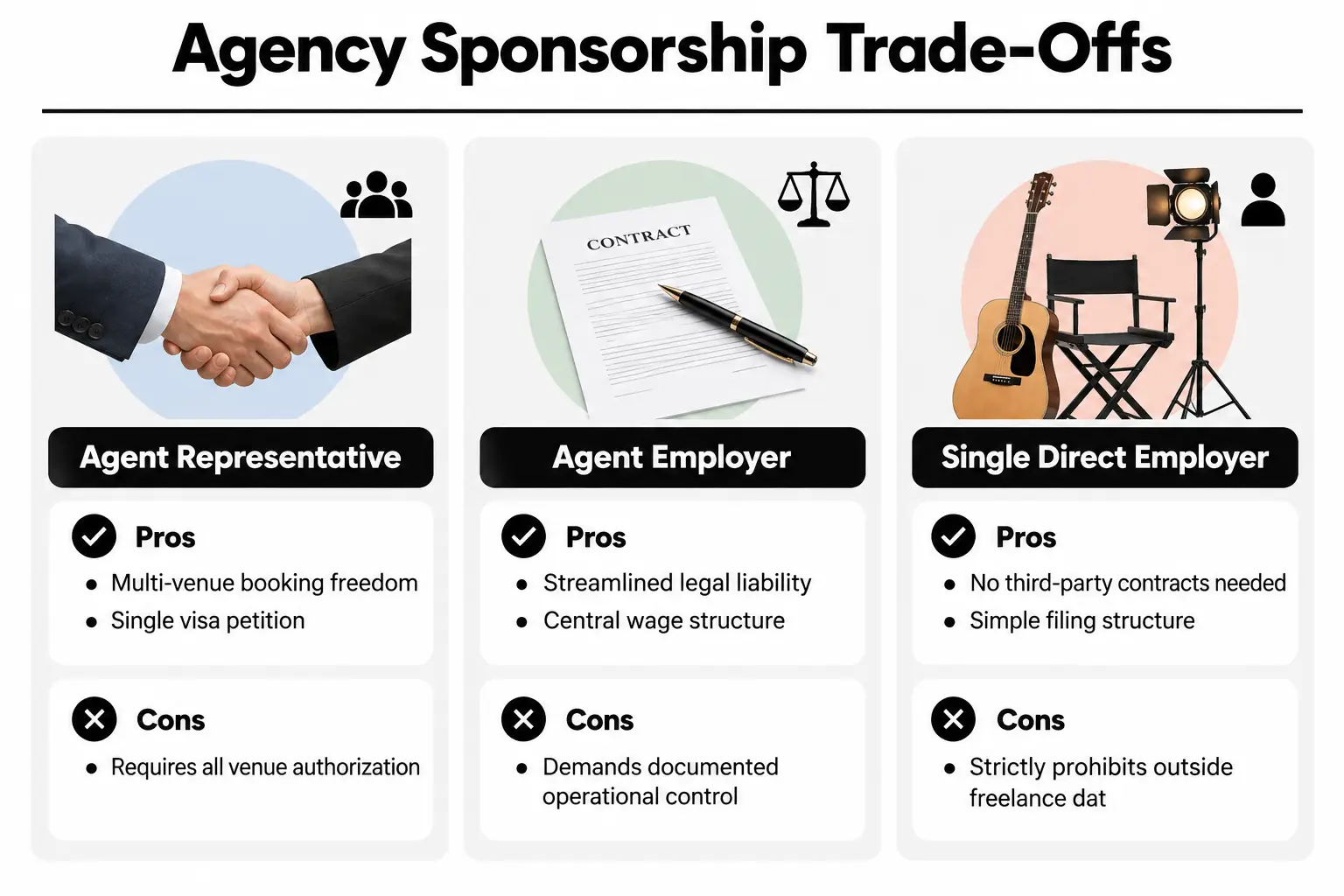
Agency sponsorship trade-offs
-
U.S. agent as representative petitioner: An established booking business or manager files the petition and represents you in dealings with separate promoters. Advantage: One approval can cover bookings at unrelated concert halls. Trade-off: The filing needs firm agency agreements and clear authorization from each venue listed in the petition.
-
U.S. agent acting as employer: The agent signs your main employment contract, then contracts your services out to venues on the tour. Advantage: Contractual responsibility sits within one main employment relationship. Trade-off: The agency must show that it genuinely controls your production calendar, rather than simply lending its name to the filing.
-
Traditional direct employer: One production business, such as a major recording label or touring company, files as your employer. Advantage: This removes the need to coordinate separate third-party employment contracts. Trade-off: Your permitted work is limited to projects that this particular sponsor owns or operates.
Matching Legal Structures to Real Production Timelines
A filing strategy that does not fit your work can put the whole tour at risk. Gaps between gigs or credentials filed under the wrong category can lead to denials or an immediate shutdown. Compare the actual production plan with current agency practices before choosing a filing route.
|
Production plan |
Recommended filing route |
Main filing risk |
What to manage |
|---|---|---|---|
|
Solo concert dates at independent venues in several cities |
Agent-based O-1B petition |
Gaps treated as time without approved activity |
Document formal rehearsals or recording sessions between gigs |
|
Established four-piece touring musical ensemble |
P-1B entertainment group filing |
Failing the 75% continuing-membership requirement |
Track how long members have belonged and review tour planning and P-1B rules |
|
Studio headliner awaiting gallery or venue contracts |
O-1B with formal deal memos |
USCIS rejecting non-binding letters of intent |
Sign detailed deal memos that state the agreed payment |
|
High-profile artist seeking permanent U.S. residence |
EB-1A self-petition |
Strict evidence standards for extraordinary achievement |
Document international acclaim alongside temporary tour filings |
Producer’s itinerary rule: An unscheduled break longer than thirty days between tour dates invites close scrutiny from immigration officers. Keep the itinerary continuous with contractually documented rehearsals, promotional appearances, or recording sessions during those breaks.
Mid-Tour Schedule Modifications and Long-Term Status Maintenance
Live schedules change after approval. A venue may move a show, a regional promoter may request another date, or a production conflict may force a postponement. Protecting your status means checking what those changes require, rather than assuming the original approval covers them.
What to Track Across Every Leg of the Tour
Regular reviews of your bookings and records help you maintain lawful status while the tour is running:
-
Substantive vs. minor changes: Adding one festival date within your petition’s original coverage area generally does not require an amendment, or formal update. Extending the tour by six months or changing key petitioners requires an amended Form I-129 filing.
-
Maintaining valid documentation: Keep copies of every signed agreement in your personal files. Retain payment records and each updated version of the tour itinerary as well.
-
Planning future green card options: Save media reviews, ticket receipts, and evidence of critical acclaim from the tour. These records can support a later immigrant self-petition prepared with a legal advisor.
Straight Answers on Multi-City Performance Filings
Can I perform at venues that were not included in my original O-1B petition?
Similar bookings can generally be added under an authorized U.S. agent’s petition. The representation agreement must expressly allow new dates within the approved artistic discipline. A booking that fundamentally changes your activities requires a formal amendment. So does work scheduled after your status expires.
What qualifies as an acceptable gap between tour dates on an artist itinerary?
USCIS expects a continuing pattern of professional activity, though short breaks for travel, rest, or production preparation are routinely accepted. During breaks longer than a few weeks, document active rehearsals, media promotions, or studio sessions. Those records help prevent the agency from shortening the overall visa approval period.
Are deal memos legally sufficient if final performance contracts are not signed?
Yes. Federal rules allow deal memos, letters of intent, or preliminary contracts if they state the essential booking terms. Each document must identify the parties and performance locations, along with the expected dates. It must also state the compensation that both sides have agreed to.
Do I need a new visa petition if my performance dates get rescheduled?
Small date changes within the petition’s approved period typically do not require an amended filing. But a postponement that moves work beyond the original expiration date requires an extension petition. Your petitioner must file that request with USCIS before your authorized stay ends.
Who can act as my petitioner if I freelance across multiple concert venues?
Freelance performers can use a legitimate U.S. management agency, booking company, or authorized third-party business as an agent-petitioner. That agent files on your behalf. This arrangement brings separate venue agreements across states into one petition and meets regulatory requirements without a traditional full-time employer.
Securing Your Live Dates with Abachi Law LLC
Tour deadlines leave little room for conflicting contracts or missed filing steps. At our firm, Abachi Law LLC, we help solo artists and production crews handle these petition requirements. We also work with international performers across New Jersey and the broader metro entertainment market.
Our artist visa guide explains how we approach immigration planning and the technical requirements behind a filing. To review your upcoming production schedule, contact us with your tour plans. Before that review, check the documents and agreements below.
-
Verified deal terms: Confirm the agreed pay and exact locations on every booking memo.
-
Itinerary gap continuity: Document studio sessions or rehearsal dates that cover breaks between performances.
-
Union consultation review: Obtain the required peer group advisory opinions early in the filing preparation.
-
Agency agreements: Review your agent-petitioner agreements to confirm they allow the flexibility your tour needs.
Legal disclaimer: This article is general information, not legal advice, and reading it does not create an attorney-client relationship. Laws change and differ from state to state, and past results do not guarantee a similar outcome. For advice about your own situation, speak with a licensed attorney at Abachi Law LLC.